What Is a Spherical Bearing and How Does It Work?
A spherical bearing is a mechanical component designed to manage movement between connected parts. Unlike a rigid bearing, it permits angular misalignment while supporting radial, axial, or combined loads. That flexibility matters in vehicle suspension joints, industrial linkages, robotics, and agricultural equipment. A small angle can prevent serious stress.
Dr. Erwin V. Zaretsky, a respected bearing-life researcher, offers a useful principle: “Bearing life is a function of load, speed, lubrication, and material.” His statement applies directly to spherical bearing selection. The bearing’s inner ring can rotate or tilt inside its outer race, depending on its design. Sliding surfaces may use steel, bronze, PTFE, or composite liners. Rolling spherical bearings may use balls or rollers to reduce friction. The exact construction changes performance dramatically.
In practice, engineers examine load direction, oscillation angle, speed, temperature, contamination, and available space. A bearing that works smoothly in a clean laboratory may fail quickly beside dust, water, or welding debris. Lubrication also deserves careful attention. Too little lubricant increases wear; too much can create heat. Seals help, but they are not magic.
The calculation is important.
Yet real installations often behave imperfectly. Misalignment may be greater than the drawing suggests. Mounting force can damage the raceway before operation begins. Therefore, inspection should include surface wear, looseness, unusual noise, and temperature changes. This guide explains how a spherical bearing works, where it performs best, and why correct installation matters. It also considers a limitation engineers sometimes overlook: flexibility can improve alignment, but excessive movement can shorten service life.
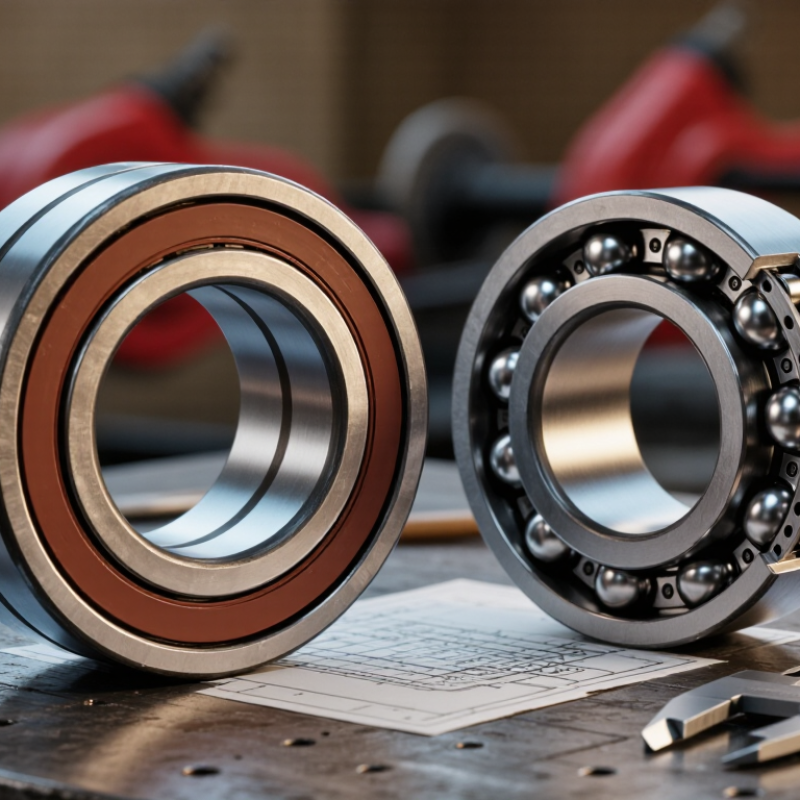
Definition and Core Purpose of a Spherical Bearing
A spherical bearing is a mechanical joint designed to support radial, axial, or combined loads while allowing angular movement. Its core purpose is simple: keep two connected parts moving smoothly when perfect alignment is impossible. The bearing usually contains an inner ball or spherical surface, an outer race, and a housing or mounting feature. Picture a suspension linkage turning several degrees while carrying a heavy load. The spherical contact helps absorb that misalignment.
ISO 12240-1 classifies spherical plain bearings by their sliding surfaces and movement capacity. Unlike standard rolling bearings, many spherical plain bearings do not use rolling elements. Their sliding surfaces must manage friction, wear, and contamination. Material selection matters. Steel-on-steel designs may require lubrication, while self-lubricating liners can reduce maintenance in restricted spaces. The wrong choice can create heat, noise, and uneven wear. Small details matter.
Reliability also needs a measurable basis. ISO 281 defines basic rating life as the number of revolutions that 90% of identical rolling bearings can reach before fatigue failure. This figure is useful, but it does not fully describe a spherical plain bearing. Misalignment, dirt, installation accuracy, and oscillating motion can change real performance. Industry testing reports often show a gap between calculated life and field results. That gap deserves attention. Engineers should inspect load direction, movement angle, lubrication condition, and mounting stiffness before selecting a bearing. A bearing may fit physically yet fail functionally.
Main Components and Their Functions
A spherical bearing supports rotating or oscillating motion while allowing controlled angular misalignment. Its defining feature is a curved contact surface between the inner and outer rings. Unlike a rigid bearing, it can follow slight shaft or housing errors. This matters when frames flex under load.
The inner ring fits around the shaft. Its spherical outside surface carries the moving contact. The outer ring holds that surface and connects with the housing or linkage. Between them, a low-friction liner or lubricated sliding layer reduces metal contact. Some designs use rolling elements instead, but plain spherical bearings are common in compact joints. Seals help retain grease and block dust and moisture. They are small parts, yet contamination can quickly increase wear.
The housing keeps the bearing aligned and transfers external forces into the surrounding structure. Lubrication ports may feed grease directly to the sliding area. During inspection, technicians often check looseness, scoring, rust, and unusual heat. A slight clearance is necessary for movement, but excessive play can indicate liner damage. Installation also matters: pressing on the wrong ring may mark the raceway. That mistake is easy to make. Load direction, speed, temperature, and oscillation angle should be checked together, not separately. In real equipment, manufacturers’ load ratings can seem precise, but poor alignment or neglected lubrication may reduce service life significantly.
How Spherical Bearings Accommodate Misalignment and Motion
A spherical bearing uses a curved sliding or rolling contact to connect two components while allowing angular movement. Its inner ring has a spherical outside surface, while the outer ring supports that surface. This geometry lets the inner ring tilt without forcing the shaft into a rigid, straight position. Small misalignment is normal. Perfect alignment is not.
When a shaft bends slightly, or two housings sit at different angles, the bearing can adjust around its center. During operation, it may also handle oscillation, slow rotation, or repeated tilting. The contact surfaces distribute load across a broad area, reducing edge pressure caused by angular error. Lubrication lowers friction and helps control heat. Seals can keep dust and moisture away, but seal drag may affect low-speed movement. That trade-off is easy to overlook.
During installation, the shaft and housing should be clean, correctly sized, and free from burrs. A technician may rotate the joint by hand before applying full load. Rough movement can indicate contamination, excessive preload, or damage. A spherical bearing does not correct every alignment problem. Excessive tilt, shock loading, poor lubrication, or loose mounting can still cause rapid wear. Load ratings also depend on direction, speed, temperature, and duty cycle. This is where simplified calculations become unreliable. Real equipment deserves measurement, inspection, and a cautious allowance for conditions that drawings rarely show.
Common Types and Material Choices
What Is a Spherical Bearing and How Does It Work?
Common Types and Material Choices
A spherical bearing connects moving parts while allowing angular movement and limited misalignment. Its rounded inner surface rotates or slides inside an outer race. This geometry helps absorb shaft deflection, installation errors, and vibration. It is not friction-free.
Common types include spherical plain bearings, rod-end bearings, and spherical roller bearings. Plain versions suit oscillating motion and moderate loads. Roller versions use barrel-shaped rollers for heavier radial loads. Rod ends fit linkages, steering systems, and compact mechanisms. ISO 12240-1 defines key dimensions for spherical plain bearings, while ISO 281 supports rolling-bearing life calculations.
Material selection changes service life dramatically. Hardened steel handles high loads and repeated motion. Stainless steel resists moisture and chemical exposure, but it may carry less load. Bronze offers good sliding behavior and tolerates poor lubrication. PTFE-lined composites can reduce maintenance, although damaged liners are difficult to inspect. Ceramic elements reduce mass and electrical conductivity, yet their cost and brittleness limit wider use.
A U.S. Department of Energy assessment estimates motor-driven systems consume about 23% of American electricity. Small friction losses can therefore matter across large equipment fleets. Industry testing should examine load, speed, temperature, contamination, and misalignment together. A material that performs well in a clean laboratory may fail beside dust, water, or shock loads. That shortcut is often wrong. Real assemblies are less tidy.
What Is a Spherical Bearing and How Does It Work?
Spherical bearings accommodate angular misalignment between connected components while allowing controlled rotation or oscillation. Common designs include plain spherical bearings, rod ends, spherical roller bearings, and spherical thrust bearings.
The chart compares approximate material density values commonly associated with spherical bearing construction. Bearing steel and stainless steel provide high strength, bronze offers good wear resistance and compatibility with sliding applications, while PTFE and PEEK are lightweight polymer choices often used for low-friction liners. Actual bearing performance also depends on load, speed, lubrication, temperature, surface finish, and the bearing design.
Typical Applications and Selection Considerations
A spherical bearing supports moving joints while allowing limited angular misalignment. It uses a rounded sliding surface between an inner ring and an outer housing. The inner ring can tilt as the connected shaft changes position. This movement reduces edge loading and helps maintain contact under uneven alignment. Small misalignments matter. In real equipment, rigid bearings may transfer unwanted stress into shafts, frames, or mounting bolts.
Typical applications include suspension linkages, agricultural machinery, construction equipment, and industrial actuators. They work well where oscillating movement is more important than continuous high-speed rotation. In a loader linkage, for example, the bearing may pivot repeatedly under heavy loads and dust. Marine mechanisms may require corrosion-resistant materials and reliable sealing. The right selection depends on load direction, movement angle, speed, temperature, and contamination. A bearing that handles heavy loads may still fail early in a dirty or poorly lubricated joint.
Selection should begin with measured radial and axial loads, not an approximate guess. Engineers should check static capacity, dynamic capacity, allowable misalignment, and shaft fit. Lubrication requirements also deserve attention. Maintenance access can influence the design as much as the load rating. Field inspections often reveal looseness caused by poor alignment rather than bearing weakness. This is easy to overlook. Seals, protective coatings, and mounting tolerances should match the working environment. Catalog data helps, but actual operating conditions must be verified before final approval.