How to Choose the Best Actuator Motor in 2026
Choosing the best actuator motor in 2026 starts with the job it must perform, not the largest force listed on a product page. A motor that moves a light panel smoothly may struggle with a loaded access hatch, especially when the mechanism faces friction, vibration, or frequent cycling. Define the required force, stroke length, speed, and duty cycle before comparing models. Small details matter. A 12-volt supply, limited mounting space, or a noisy operating environment can quickly narrow the options.
Reliable selection also means checking how a motor performs beyond its headline specifications. Review current draw, feedback options, ingress protection, mounting dimensions, and the manufacturer’s stated operating limits. For a positioning task, an integrated encoder or limit switches may provide more useful control than extra speed. For outdoor equipment, seals and temperature ratings deserve careful attention. No single model fits every application. Even careful calculations can miss real-world friction, so allow a sensible margin and test the actuator motor under representative load when possible. A short bench test can reveal heat buildup, uneven travel, or control issues before installation. This guide explains how to compare key specifications, match motor types to practical requirements, and avoid common buying mistakes. The right choice is rarely the most powerful one; it is the one that operates consistently, fits the system, and remains dependable over time.
Define the Motion Requirements and Operating Conditions
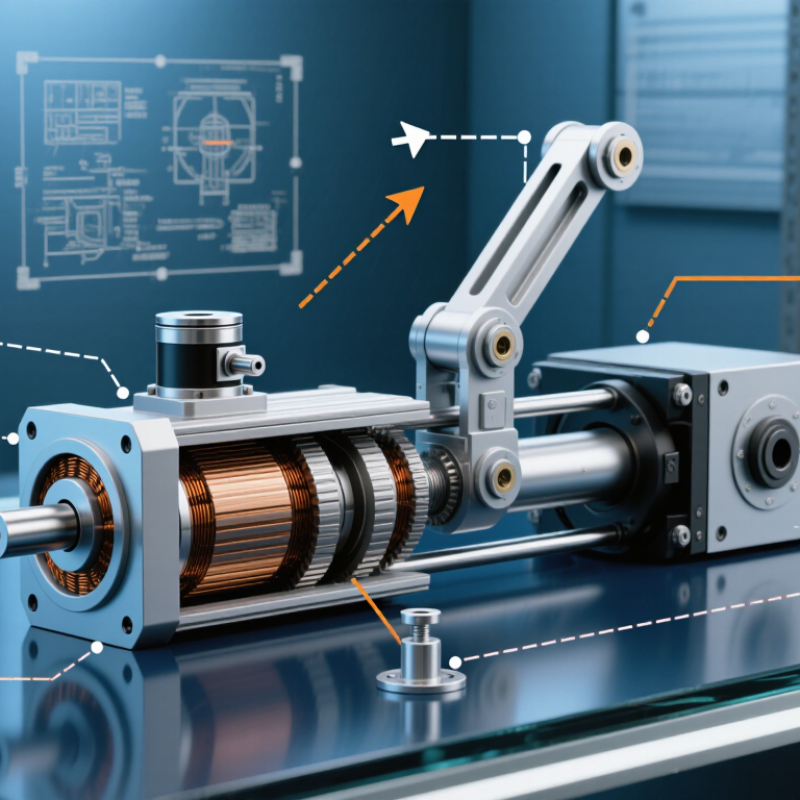
Before comparing actuator motors, define the motion the machine must produce. Record the required stroke, travel speed, force, and positioning accuracy. Measure the real load, not just the part being moved; brackets, friction, and changing angles add resistance. A sliding panel may need little force at mid-travel but more near its seals. Note how often it moves and how long it rests between cycles. Duty cycle matters. A motor that handles one short movement may overheat during repeated operation.
Then describe the operating conditions. Check available voltage, controller limits, mounting space, and whether the actuator will face dust, moisture, vibration, or temperature swings. Specify what should happen if power is lost or the load meets an obstruction. These details can narrow the choices more than a headline force rating. Test a representative load if possible, and watch for slow starts, excess heat, or drift under load. Small surprises count. Even a careful estimate can miss friction that appears only after installation; that is worth admitting early. Keep a margin for variation, but avoid oversizing without reason, since excess speed or force can make motion harder to control.
Compare Actuator Motor Types and Their Trade-Offs
Choosing an actuator motor means comparing force, speed, precision, duty cycle, and installation conditions—not chasing one “best” type. Electric actuators offer accurate positioning and straightforward control, making them useful for repeatable tasks. Pneumatic models can move quickly and suit simple, frequent cycles, but compressed-air leaks and noisy exhaust may add operating costs. Hydraulic systems deliver high force in compact spaces, though pumps, hoses, and fluid maintenance complicate installation. Trade-offs matter.
The International Energy Agency’s 2011 report, Energy-Efficient Electrical Motors, estimates that motor-driven systems use 43–46% of global electricity. That figure covers far more than actuators, but it shows why efficiency deserves attention. Compare energy use across the full duty cycle, not just the motor’s nameplate rating. A slow actuator that holds position efficiently may outperform a faster unit that runs constantly. I would not treat this as a tidy ranking; real installations are messier.
Tips: Measure the actual load with a force gauge, then test the actuator under expected temperature and cycle frequency. Check whether it must hold a load after power loss. Also inspect cable routing, dust exposure, and available mounting space. Small details bite. If your measurements are uncertain, leave margin—but excessive oversizing can waste energy and reduce control quality.
Calculate Force, Speed, Stroke, and Duty-Cycle Needs
Choosing an actuator motor starts with the load, not the catalog. Measure the moving mass and include friction, mounting angle, and any force needed to overcome a seal or spring. For a vertical lift, estimate force from mass multiplied by gravity, then add a reasonable margin for startup and changing conditions. Measure it twice. A large safety factor can waste energy, while too little may cause stalls.
Set the required speed and stroke from the actual task. If a panel must travel 150 millimeters in three seconds, the actuator needs an average speed of 50 millimeters per second. Check whether that speed is available under load; unloaded figures can be misleading. For a rotating mechanism, account for linkage geometry, since leverage changes through the travel. Small details matter.
Duty cycle is the share of each operating period spent running: 20 seconds on in a 100-second cycle equals 20 percent. Compare this with the motor’s rated duty cycle, and consider heat, pauses, and repeated starts. Heat changes things. A motor that works during a brief bench test may overheat in continuous service. Prototype with the real load, record temperature and travel time, and revisit assumptions if results differ. My first force estimate would not be trusted without that test.
Check Controls, Power, Compatibility, and Safety
How to Choose the Best Actuator Motor in 2026
An actuator motor must match the motion, not just the advertised force. Check required load, stroke, speed, duty cycle, and mounting dimensions against the application. A motor that runs continuously may overheat if it was designed for intermittent movement. Small details matter. The International Energy Agency has reported that motor-driven systems use about 45% of global electricity, making efficiency and correct sizing practical concerns, not just spec-sheet details.
Choose controls that fit the equipment already in place. Confirm voltage, current, control signals, feedback type, and communication protocol before ordering. Then check that the actuator’s connectors and mounting points match the machine. The U.S. Department of Energy’s motor-system guidance highlights the value of assessing the whole drive system, rather than selecting a motor in isolation. A control mismatch can mean extra hardware, delays, or unreliable positioning. I have seen compatibility checks treated as paperwork; they are easier before installation.
Safety needs a physical review. Look for overload protection, end-of-travel limits, thermal protection, and a safe response to power loss. Consider pinch points around moving linkages, especially during maintenance. IEC 61800-5-2 provides functional-safety requirements for drive systems; confirm that the chosen equipment and system design meet the project’s needs. A data sheet cannot reveal every installation risk. Test the actuator under realistic load and inspect how it behaves when motion is interrupted.
Evaluate Reliability, Maintenance, and Total Cost in 2026
Choosing an actuator motor in 2026 means pricing the hours it moves, not just its purchase price.
The U.S. Department of Energy’s 2002 Manufacturing Motor Systems Market Assessment found that motor-driven systems accounted for about 69% of U.S. manufacturing electricity use. That figure covers industrial motor systems, not actuators alone, but it shows why operating efficiency matters. Check real load, duty cycle, stroke length, and holding time against machine logs. Small movements add up.
Reliability depends on the installation, too.
Dust near a rod seal, washdown, side loading, and frequent starts can all affect service life. Ask for cycle-life test conditions, then compare them with your load and operating temperature. Inspect practical details: accessible grease points, replaceable seals, cable routing, and whether a technician can replace the unit without dismantling nearby equipment. Maintenance should be planned, not guessed. Downtime is expensive.
The DOE’s 2014 guide, Improving Motor and Drive System Performance, recommends evaluating motor and drive systems together. Apply that thinking to the actuator, controller, and power supply. Build a five-year cost estimate covering purchase, energy, inspections, spare parts, and production losses during replacement. Still, the spreadsheet can lie: a modestly priced unit may cost more if its seals fail early or spares take weeks to arrive. Compare service records and written warranty terms, not claims alone.