Engineer's Toolbox Visit www.hansarobotics.com
Category Banner

What Are the 2026 Top Optic Cable Types?

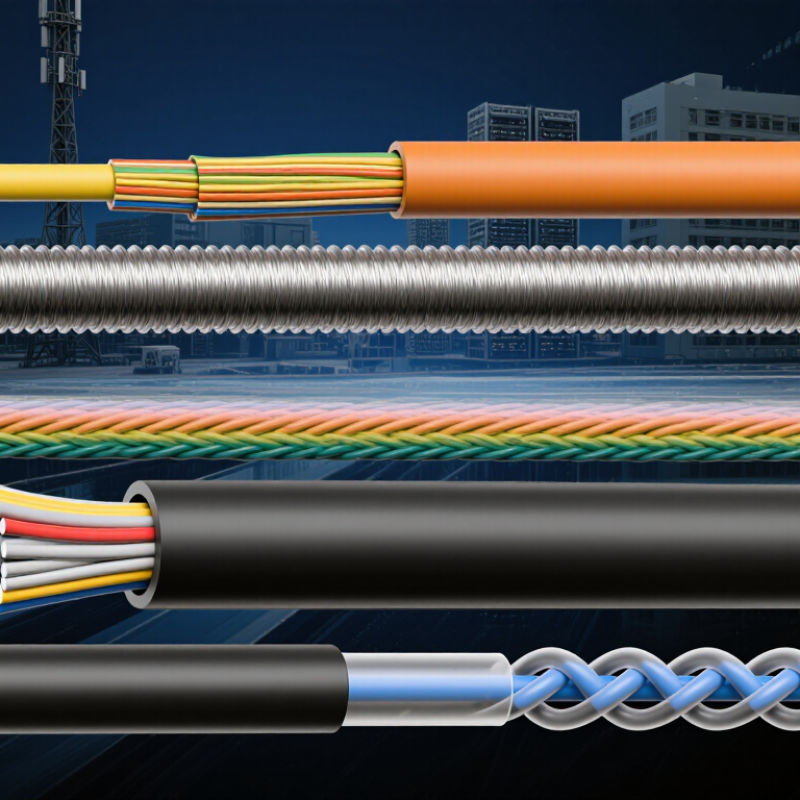
In 2026, choosing the right optic cable depends on distance, bandwidth, installation conditions, and future expansion plans. Network engineers are comparing single-mode, multimode, armored, ribbon, loose-tube, tight-buffered, and bend-insensitive designs more carefully than before. Each type solves a different problem. A data center may favor high-density ribbon cable, while a long-haul telecom route usually requires single-mode fiber. A factory floor may need armored protection against crushing, vibration, and accidental impact.

This guide introduces the leading optic cable types expected to shape modern network projects in 2026. It connects technical specifications with practical installation experience, including connector compatibility, bend radius, environmental sealing, and testing requirements. Small details matter. A cable that fits the bandwidth plan may still fail in a crowded tray if technicians cannot route it safely. Likewise, a low-cost design can create higher maintenance costs later. That lesson is easy to overlook.

Reliable selection should follow recognized industry standards, manufacturer documentation, and measured test results rather than marketing claims alone. In practice, installers should inspect attenuation, insertion loss, return loss, tensile strength, and temperature ratings before deployment. No single cable type is best everywhere. That remains true. This overview also acknowledges a common weakness in planning: future traffic growth is often estimated too narrowly. By examining current use cases, installation risks, and upgrade needs, readers can make a more informed optic cable decision for campuses, data centers, telecom networks, and industrial systems.

What Are the 2026 Top Optic Cable Types?

What Defines a Top Optic Cable Type in 2026?

What Are the 2026 Top Optic Cable Types?

What defines a top optic cable type in 2026 is not speed alone. It must match distance, bandwidth, installation space, and operating conditions. Single-mode fiber remains a strong choice for campus links, metropolitan networks, and long-distance connections. Multimode fiber suits shorter data-center runs where equipment density and controlled distances matter. Active optical cables can simplify high-speed connections inside compact server rows. They reduce separate transceiver and patching decisions, but they may offer less flexibility during future upgrades.

A top cable also needs low insertion loss, stable signal performance, and a suitable bend radius. Modern installations increasingly consider power use, connector reliability, flame ratings, and repair access. Testing should include insertion-loss measurements and optical time-domain reflectometer results. Clean end faces matter more than many teams expect. One small contaminant can weaken an otherwise excellent link. It is tempting to choose the cable with the highest advertised capacity. That decision can age badly when compatibility, heat, or maintenance is ignored. No cable wins everywhere.

Tips: Confirm the required distance and transceiver type before purchasing. Leave realistic slack near cabinets. Label both ends clearly. Ask for test records, not only a product datasheet. Recheck the design after installation, because real pathways often differ from drawings.

How Single-Mode Fiber Supports Long-Distance Networks

What Are the 2026 Top Optic Cable Types?

In 2026, single-mode fiber remains central to long-distance network design. Its narrow glass core guides one light path with minimal signal spreading. This design supports transmission across metropolitan links, national backbones, and submarine routes. It also works well with 1310 nm and 1550 nm wavelengths.

Distance matters.

Single-mode fiber usually offers lower attenuation than multimode fiber. Engineers can therefore place fewer regeneration sites along a route. Dense wavelength systems can send multiple channels through one fiber pair. A properly installed cable may carry data for many kilometers before active equipment becomes necessary. However, the cable alone does not guarantee performance. Poor splicing, dirty connectors, and excessive bends can create serious losses.

Field testing should include optical time-domain reflectometry and insertion-loss measurements. Technicians should inspect connector end faces before every critical connection. They also need to respect the cable’s minimum bend radius, especially inside crowded cabinets. Single-mode alignment requires careful equipment and trained handling. That adds cost.

Not always the cheapest choice.

A practical design should consider distance, bandwidth, repair access, weather exposure, and future upgrades. Multimode fiber may remain sensible inside shorter buildings. For long-distance networks, single-mode fiber provides stronger reach and upgrade potential. Still, specifications can look better than real installation results. Careful testing remains the difference between a reliable link and an expensive disappointment.

Why Multimode Fiber Remains Important for Data Centers

What Are the 2026 Top Optic Cable Types?

Data centers in 2026 will continue using multimode, single-mode, direct-attach, and active optical cables. Each type serves a different distance, speed, and installation condition. Multimode fiber remains important because many server rooms need short, predictable links between racks, switches, and storage systems.

OM4 and OM5 multimode cables can support high-speed connections across typical data-center distances. Their compact cores make alignment easier during installation. They also work well with parallel-fiber transceivers, which divide traffic across multiple fibers. In a crowded rack, this can simplify cable routing and reduce copper heat near switch ports. A technician can often inspect these links with a visual fault locator and an optical power meter.

Short runs matter.

Multimode is not perfect. Its reach decreases as signaling speeds increase, and poor cleaning can create immediate insertion loss. Engineers should check connector quality, polarity, bend radius, and transceiver compatibility before ordering cable assemblies. A link that looks correct may still fail under full traffic. This is where practical testing matters more than a catalog claim.

Single-mode fiber remains the stronger option for campus links, longer data-center runs, and future expansion. Direct-attach copper cables can cost less for very short connections, but they add weight and restrict airflow. Active optical cables offer lighter routing, although their electronics require careful power and compatibility checks. Choosing the best optic cable type requires measured distance, port speed, maintenance habits, and realistic upgrade plans. Forecasts can be wrong. A flexible design leaves room to change.

Where Specialty Optic Cables Fit in Modern Applications

In 2026, single-mode fiber will remain dominant in long-haul, 5G backhaul, and data-center interconnects. Multimode fiber still suits shorter links, especially inside buildings. Ribbon cable improves mass-splicing efficiency, while armored cable protects routes exposed to crushing, moisture, or rodents.

Specialty optic cables matter when ordinary designs meet difficult conditions. ITU’s Facts and Figures 2024 reports 5.5 billion people online, equal to 68% of the global population. That growth increases pressure on dense access networks, mobile sites, and edge facilities. Bend-insensitive fiber, defined through ITU-T G.657, helps installers route cables around tight cabinets and apartment entrances. Hollow-core designs may reduce latency, but deployment remains limited and technically demanding.

The details are practical. A specialty cable may pass beneath a railway, through a crowded riser, or inside a vibrating industrial plant. Temperature-resistant and low-smoke designs also support tunnels, factories, and transport systems. The Fiber Broadband Association’s 2024 deployment research continues to show strong fiber expansion across access networks. Yet forecasts are not guarantees. Installation skill, connector cleanliness, pulling tension, and repair access can decide performance more than the cable label. That is easy to underestimate.

What Are the 2026 Top Optic Cable Types? - Where Specialty Optic Cables Fit in Modern Applications

Optic Cable Type Typical Fiber or Construction Typical Reach and Performance Common Applications in 2026 Primary Advantages Main Limitations Where Specialty Versions Fit
Single-Mode Loose-Tube Cable G.652.D single-mode fiber in gel-filled or dry water-blocked loose tubes Designed for long-distance transmission; commonly supports 1310 nm, 1550 nm and 1625 nm operation Telecommunications backbones, metropolitan networks, access networks and utility routes Low attenuation, strong environmental protection and high fiber-count availability Usually requires splice closures or patch panels; less convenient for short indoor runs Low-smoke indoor/outdoor versions, high-count designs and cables rated for extreme temperature or direct burial
Bend-Insensitive Single-Mode Cable G.657.A1 or G.657.A2 fiber, commonly used with compact cable constructions Supports access-network wavelengths while tolerating tighter routing bends than conventional G.652.D fiber Fiber-to-the-home, apartment buildings, data-center cross-connects and space-constrained cabinets Reduced bend loss, easier installation and better performance in crowded pathways Small bend radius does not eliminate the need to follow the cable manufacturer's minimum radius Drop cables, access distribution cables, pre-terminated assemblies and ultra-compact indoor designs
Multimode OM3 and OM4 Cable 50/125 µm laser-optimized multimode fiber Typically used for short-reach data transmission at 850 nm; OM4 generally provides greater reach than OM3 for comparable high-speed links Data centers, enterprise server rooms, storage networks and building backbones Cost-effective short-distance links and compatibility with widely deployed multimode equipment Reach is substantially shorter than single-mode fiber; performance depends on transceiver and link design High-density breakout cables, polarity-managed assemblies and low-smoke indoor cables for dense racks
Multimode OM5 Cable Wideband 50/125 µm multimode fiber optimized for short-wavelength multiplexing Supports short-reach data-center links and may enable multiple wavelengths over multimode infrastructure when the transceiver system is designed for it High-density data centers and selected structured-cabling upgrades Potentially improves fiber utilization in suitable short-reach architectures Higher cable and equipment costs may not provide benefits on ordinary single-wavelength links Application-specific parallel-optics and wavelength-division solutions in high-density switching environments
Ribbon Fiber Cable Multiple fibers arranged in flat ribbons, commonly used with mass-fusion splicing Available in high fiber counts for long-haul, metro and access routes Large backbone routes, central offices, data-center interconnects and high-capacity access networks Fast mass-fusion splicing, efficient fiber density and simplified high-count installation Requires compatible ribbon splicing equipment and careful handling during branching High-count compact cables, rollable ribbon designs and cables optimized for rapid restoration work
Armored Fiber-Optic Cable Single-mode or multimode fibers protected by metallic or dielectric armor Performance depends on the selected fiber; armor improves mechanical resistance rather than optical bandwidth Industrial sites, transportation systems, data centers, utility facilities and exposed indoor pathways Improved crush, rodent and impact protection Greater weight, larger bend radius and more complex termination than unarmored cable Dielectric armor for electrically sensitive areas, flexible armor for equipment connections and harsh-environment assemblies
ADSS Aerial Cable All-dielectric self-supporting cable with strength members and weather-resistant jacket Designed for aerial spans; span length depends on cable construction, sag, wind, ice and installation conditions Electric utility corridors, rural broadband, roadside networks and aerial distribution No metallic messenger required and suitable for installation near energized lines when properly engineered Requires accurate span and environmental calculations; vulnerable to unsuitable tension or installation practices High-voltage corridor designs, anti-tracking jackets and compact low-sag cables for congested aerial routes
Microduct and Blown-Fiber Cable Small, lightweight fiber units installed by air or water into pre-installed microducts Supports staged network expansion and efficient use of limited conduit space Urban broadband, campus networks, railway corridors and rapidly expandable access infrastructure Lower initial fiber deployment, reduced civil-work requirements and easier future capacity upgrades Requires compatible ducts, route planning, sealing and installation equipment High-density fiber units, ruggedized units for difficult routes and compact cables for congested ducts
Indoor Tight-Buffered Cable Fibers with a protective buffer layer, often combined with aramid strength members and a flame-rated jacket Optimized for building distribution and patching rather than long outdoor spans Office buildings, campuses, data centers, telecommunications rooms and vertical risers Easy termination, flexible routing and convenient access for field splicing or connectorization Less resistant to prolonged moisture and severe outdoor mechanical stresses unless specially rated Plenum-rated, riser-rated, low-smoke zero-halogen and bend-insensitive versions for demanding building environments
Industrial and Robotics Cable Flexible fiber cable with enhanced jacket, strength members and repeated-flex construction Optical performance is application-specific; mechanical life is evaluated by bend cycles, torsion and tensile loading Factory automation, machine vision, robotic arms, process control and industrial Ethernet Handles vibration, movement, oil exposure and repeated flexing better than standard premises cable Higher cost and more application-specific installation requirements Continuous-flex, torsion-rated, oil-resistant, low-temperature and hybrid fiber-power cable assemblies
Specialty Sensing Cable Single-mode or multimode fiber selected for distributed temperature, acoustic, strain or vibration sensing Measures physical conditions along the fiber; usable distance and resolution depend on the sensing method and interrogator Pipelines, tunnels, railways, bridges, perimeter security, wells and power infrastructure Provides continuous, passive and electrically nonconductive monitoring over long routes Requires specialized interrogators, calibration and interpretation of field data Loose-tube sensing cable, armored sensing cable, high-temperature cable and vibration-sensitive constructions
Submarine and Underwater Cable Optical fibers surrounded by water-blocking layers, strength members and protective armor selected for marine installation Designed for long underwater routes; optical reach depends on fiber type, system design and repeaters where required Inter-island links, offshore energy, subsea sensors and marine research systems High-capacity connectivity in environments where conventional terrestrial cable cannot be used Complex installation, specialized testing and high protection requirements Shallow-water armored cable, pressure-resistant sensing cable and low-loss cable for long subsea links
High-Temperature and Radiation-Resistant Cable Special fiber, buffer and jacket materials selected for elevated temperature, radiation or chemical exposure Operating limits vary widely by material system and must be verified against the environmental profile Power generation, aerospace, defense, oil and gas, research facilities and hazardous industrial sites Maintains communication or sensing capability where ordinary cable materials degrade Specialized construction, limited availability and potentially more difficult termination Metal-free high-temperature cable, hermetically sealed designs, radiation-tolerant fiber and mineral-insulated assemblies

Note: Actual attenuation, bandwidth, bend radius, tensile strength, temperature range and transmission distance depend on the fiber grade, cable construction, connectors, installation method and network equipment. Always verify the applicable IEC, ISO/IEC, ITU-T, TIA or local installation requirements before deployment.

How to Select the Right Optic Cable for Different Networks

What Are the 2026 Top Optic Cable Types?

How to Select the Right Optic Cable for Different Networks

Network growth changes cable priorities. Cisco’s Annual Internet Report projected 5.3 billion internet users and 29.3 billion connected devices by 2023. That pressure still shapes 2026 designs. Single-mode OS2 fiber suits data centers, metropolitan links, and long campus routes. It supports high bandwidth over kilometers and leaves room for future upgrades. Use bend-insensitive G.657 fiber where crowded cabinets create tight turns.

For short data-center connections, multimode OM4 remains practical. It supports efficient 100G links across common server-room distances. OM5 can help when short-wave wavelength multiplexing is planned, but it is not automatically better. Check transceiver compatibility first. Active optical cables simplify short rack connections, while duplex patch cables offer easier replacement. Ribbon fiber can reduce installation time in large backbone projects. It demands careful splicing, though.

Dell’Oro Group’s optical transport research continues to associate network investment with cloud, AI, and traffic expansion. That does not mean every site needs the highest-grade cable. Measure distance, connector loss, bend radius, channel speed, and future capacity. Industrial networks need stronger jackets and stable performance under heat or vibration. Outdoor routes need water-blocking construction and protection from ultraviolet exposure. I have seen projects over-specify fiber, then underspecify enclosures. That mistake is expensive. The imperfect part is forecasting demand. A modular single-mode design may cost more today, yet replacement work can cost far more tomorrow.