Why Choose Mechanical Parts from Global Suppliers?
Why Choose Mechanical Parts from Global Suppliers?
Mechanical Parts are no longer sourced only from the nearest factory. Buyers now compare engineering capability, production scale, quality systems, and delivery resilience across several regions. Global suppliers can provide access to CNC machining, precision casting, forging, injection molding, and surface treatment under one sourcing strategy. This broader network may reduce unit costs and shorten development cycles. It can also support difficult requirements, such as tight tolerances, corrosion-resistant finishes, and documented material traceability.
The McKinsey Global Institute reports that significant supply-chain disruptions may occur every 3.7 years, while companies could risk losing 45% of one year’s profits over a decade. That finding makes supplier diversification more than a purchasing preference. It becomes a practical risk-control decision. Deloitte’s 2024 Global Manufacturing Industry Outlook also highlights resilience, digital operations, and advanced production as key manufacturing priorities. A qualified overseas supplier may use automated inspection, real-time production monitoring, and ISO 9001-based quality procedures. These details matter when a part must fit precisely inside a gearbox, pump, or industrial assembly.
The World Bank’s 2023 Logistics Performance Index shows clear differences in customs, infrastructure, and delivery reliability between markets. Global sourcing is not automatically better. Lead times, communication gaps, tariffs, and inconsistent documentation can create expensive surprises. That weakness deserves attention. Buyers should audit facilities, approve samples, verify certificates, and define inspection standards before placing large orders. Experienced sourcing teams often begin with a small batch and measure dimensional accuracy, packaging quality, and on-time delivery. The best global supplier is not simply the cheapest. It is the partner that combines measurable quality, transparent communication, and dependable performance over repeated orders.
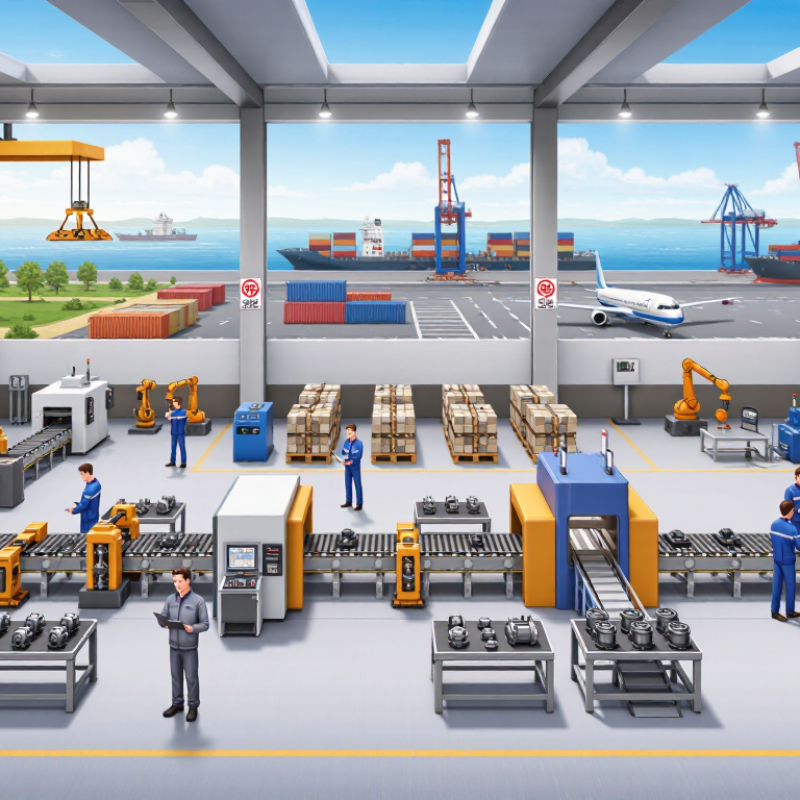
What Are Mechanical Parts and Global Suppliers?
Mechanical parts are the working pieces inside machines, tools, vehicles, and production equipment. They include gears that transfer motion, shafts that carry torque, bearings that reduce friction, and brackets that hold assemblies. A small washer can matter as much as a large housing. Material and geometry determine how a part performs under heat, vibration, pressure, or repeated load. Common choices include steel, aluminum, stainless alloys, brass, and engineered polymers. The right choice depends on the application, not appearance.
Global suppliers are manufacturers or distributors serving customers across national borders. They may produce parts in one country, inspect them in another, and ship them to a factory elsewhere. This network can offer broader machining capacity, competitive pricing, and access to specialized processes. Those benefits require careful control. From practical sourcing work, I have learned that a clear drawing is only the beginning. Dimensions, tolerances, surface finish, heat treatment, packaging, and inspection records must match the real operating need. A supplier should explain its equipment, quality methods, traceability, and response process when defects appear.
Engineers often compare samples before approving a production order. They check thread fit, edge condition, coating thickness, and measured dimensions. Digital communication helps, but physical evidence is still valuable. A video call cannot reveal every burr. Global sourcing is not automatically better. Time zones, language gaps, freight delays, and changing specifications can create avoidable problems. I have seen teams overvalue a low quotation and underestimate rework costs. That mistake deserves reflection. One useful question is simple: How will you prove this part meets the drawing?
What Advantages Do Global Suppliers Offer?
Why Choose Mechanical Parts from Global Suppliers?
What Advantages Do Global Suppliers Offer?
Global suppliers can widen access to mechanical parts, specialized machining, and tested materials. Their regional production networks often provide more options than a single local source. The World Trade Organization reports that manufactured goods remain a major part of global merchandise trade. This supports broader supplier comparison and technical collaboration.
Cost is only one advantage. Global manufacturers may offer advanced equipment, larger production capacity, and experience with demanding tolerances. McKinsey reported that 93% of surveyed supply-chain leaders planned to improve resilience after recent disruptions. A qualified supplier in another region can reduce dependence on one factory. It may also provide backup capacity during sudden demand changes. However, distance creates risks. Freight delays, language gaps, and inconsistent documentation can weaken an attractive quotation. A cheaper part is not always cheaper overall.
Tips: Request material certificates, inspection records, sample parts, and clear delivery terms. Compare total landed cost, not unit price alone. Ask how the supplier handles nonconforming parts. A practical audit, even by video, can reveal useful details. Still, remote checks are imperfect. Engineers should validate fit, function, and repeatability before full production. Choose suppliers with transparent processes, measurable quality controls, and realistic lead times.
How Should Buyers Compare Quality, Cost, and Delivery?
Why Choose Mechanical Parts from Global Suppliers?
How Should Buyers Compare Quality, Cost, and Delivery?
A global supplier should be judged by evidence, not attractive quotations. Request material certificates, dimensional inspection records, process capability data, and traceability for each batch. ISO’s 2023 Survey recorded more than one million ISO 9001 certificates worldwide. Still, certification alone cannot prove every shipment. A certificate is only a starting point.
Compare quality through measurable tolerances, rejection rates, corrective-action response, and sample approval. Ask how operators inspect a turned shaft, threaded hole, or heat-treated gear. A practical audit may reveal poor lighting, worn gauges, or unclear calibration labels. Those details matter. Buyers should also test a small pilot order before approving large volumes. My experience suggests that the cheapest sample often becomes expensive after installation.
Cost comparison must include tooling, packaging, freight, duties, inspection, and possible rework. Delivery needs equal attention. The World Bank’s Logistics Performance Index 2023 evaluates customs, infrastructure, shipment arrangements, logistics competence, tracking, and timeliness. These factors influence whether parts arrive when production needs them. UNCTAD’s Review of Maritime Transport reports that shipping carries over 80% of global merchandise trade by volume, so port disruption can affect even carefully planned orders. Ask suppliers for realistic lead-time ranges, buffer stock options, and written escalation procedures. Perfect forecasts are rare. A flexible supplier may be more valuable than a cheaper one.
What Risks Should Buyers Assess Before Choosing a Supplier?
Why Choose Mechanical Parts from Global Suppliers?
Global suppliers can offer broader machining capacity, competitive pricing, and access to specialized materials. Yet lower prices can conceal serious risks. Buyers should verify dimensional tolerances, material grades, surface treatments, and production capacity before ordering. A small error in a 0.02 mm tolerance may stop an entire assembly line.
Supplier reliability requires evidence, not attractive promises. Request recent inspection reports, material certificates, process records, and traceable batch numbers. Check whether the supplier uses calibrated measuring equipment and documented quality procedures. An independent pre-shipment inspection can reveal scratches, incorrect threads, poor packaging, or inconsistent dimensions. Communication is another warning sign. Delayed answers often become delayed deliveries. Buyers should also assess payment security, shipping insurance, intellectual property protection, and compliance with applicable import requirements.
Tips: Start with a small trial order. Test the parts in real conditions. Compare samples against approved drawings. Keep written specifications and revision records. Do not rely only on certificates; verify critical data independently. I have seen buyers focus heavily on unit price and overlook packaging damage during transit. That mistake was expensive. A better review considers total cost, replacement time, production downtime, and supplier responsiveness. Even experienced purchasing teams can miss hidden risks when deadlines become urgent. Supplier selection deserves patience.
Why Choose Mechanical Parts from Global Suppliers?
What Risks Should Buyers Assess Before Choosing a Supplier?
The chart uses a 1–5 buyer assessment scale, where 1 indicates low exposure and 5 indicates critical exposure. Quality consistency, delivery reliability, traceability, compliance, communication, and logistics should be evaluated before selecting a global mechanical-parts supplier. Higher scores indicate areas requiring stronger verification, contractual controls, and contingency planning.
Assessment dimensions reflect standard supplier due-diligence practices used in industrial procurement; scores should be adjusted using audit results, sample testing, supplier records, and landed-cost analysis.