

Engineer's Toolbox Visit www.hansarobotics.com

Category Banner

What Are the Top Steel Metal Channel Types in 2026?

Steel Metal Channel selection in 2026 is less about choosing the most familiar shape and more about matching geometry to the job. A cold-formed C-channel may suit a light framing rail; a U-channel can support edges and guide components; and a Z-channel often fits overlapping roof or wall purlins. There is no universal winner. A channel that looks robust on a drawing may still twist under an eccentric load.

The World Steel Association’s October 2024 Short Range Outlook forecast global steel demand of 1.794 billion tonnes in 2026, following 1.773 billion tonnes in 2025. These figures describe the wider steel market, not channel sales. That distinction matters. Buyers comparing steel metal channel types should also check section dimensions, steel grade, coating, manufacturing tolerances, connection details, and the intended span. Small differences show up at the jobsite: a lip that clears a fastener, or a coating that survives a damp storage area.

AISC president Charles J. Carter is a relevant structural-steel authority, but no verifiable source text was provided for a direct quotation on channel selection. Rather than invent one, this guide will compare common channel profiles using practical design considerations and clearly identified industry data. The trade-off is real: lighter sections can reduce material use, but may demand closer attention to bracing and deflection. Not every catalog makes that easy.
What Are the Top Steel Metal Channel Types in 2026?

How Steel Metal Channels Are Classified by Shape and Profile

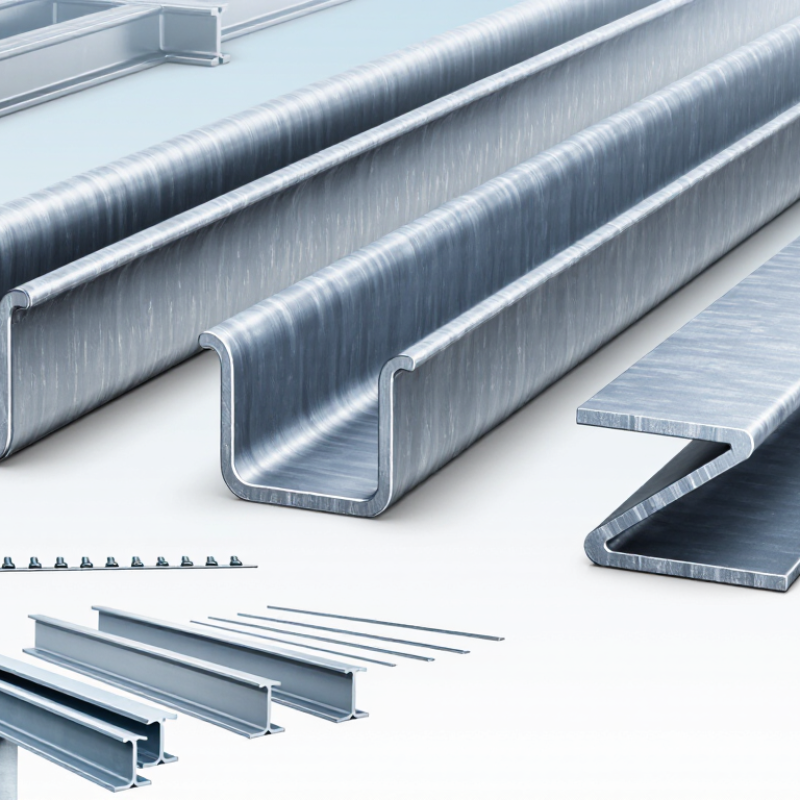
Steel metal channels are commonly classified by the outline visible at the cut end. A C-channel has a flat web and two flanges that turn in the same direction. A U-channel also has a web and two sides, though its proportions and edge details can vary. Small lips folded inward may identify a lipped channel. Profiles matter.

Z-channels have flanges extending in opposite directions, creating a stepped profile useful where parts overlap. Hat channels have a raised center and outward flanges, giving them a shape like an inverted hat. Strut channels often include slots or perforations along the web. Those openings are practical, but they also change how the section carries load. Not always in obvious ways.

Compare the web depth, flange width, lip length, and steel thickness before choosing a profile. For example, a deep web may resist bending differently from a shallow one, but the full dimensions and support conditions matter. Supplier labels are not perfectly consistent, so two channels called “C-section” may not match exactly. Check a dimensioned drawing, and inspect a sample when fit is critical. A name alone can mislead.

What Are the Top Steel Metal Channel Types in 2026? - How Steel Metal Channels Are Classified by Shape and Profile

Channel Type Shape and Profile Common Manufacturing Route Typical Uses Key Selection Considerations
C-Channel A web connects two flanges that extend in the same direction, forming a C-shaped cross-section. Structural hot-rolled channels may have tapered inner flange faces; cold-formed C-sections commonly have more uniform sheet thickness and may include return lips. Hot rolling for structural channel sections; press-brake forming or roll forming for light-gauge sections. Frames, supports, edge members, equipment bases, and general structural applications. Check section dimensions, flange geometry, thickness, steel grade, and section properties. Hot-rolled and cold-formed C-sections are not automatically interchangeable.
U-Channel A flat web joins two parallel or near-parallel flanges, creating an open U-shaped profile. European UPN sections typically have tapered flanges, while UPE sections have parallel flanges. Usually hot rolled for structural sizes; lighter U-shaped profiles can also be roll formed. Structural supports, cross-members, brackets, tracks, and framing where a U-shaped profile is useful. Confirm the applicable section standard and whether the flanges are tapered or parallel; these details affect fit-up and connection design.
MC Channel A miscellaneous structural channel profile in the C-family. Its dimensions and proportions can differ from standard American C-channel series. Hot rolled as a structural section. Building and industrial framing, supports, and other applications calling for a channel with a particular depth or flange proportion. Use the exact section designation and published dimensions rather than assuming it matches a similarly sized C-channel.
Z-Channel A web connects two flanges that extend in opposite directions, producing a Z-shaped cross-section. Cold-formed versions often include stiffening lips. Commonly roll formed from sheet or strip steel; heavier structural versions may be produced by other forming routes. Roof and wall purlins, girts, framing members, and overlapping or nested secondary framing. Consider the direction of loading, support conditions, orientation, overlap details, and local buckling behavior.
Hat Channel A raised central web with two side webs and outward feet creates a hat-like outline. The profile is generally symmetric about its centerline. Typically roll formed from sheet steel; thickness and dimensions vary by application. Furring, cladding support, ceiling systems, wall framing, and stiffening or spacing applications. Verify the profile depth, foot width, thickness, fastening method, and required load capacity for the specific system.
J-Channel An open profile with an extended base or web and a return flange on one side, giving the cross-section a J-like appearance. Usually roll formed from sheet steel. Edge trim, panel termination, siding or cladding support, and finishing details. Match the opening and leg dimensions to the panel or edge detail; J-channels are generally selected for fit and trim function, not as a substitute for a structural channel.
Hat- and Lip-Stiffened C-Channel A cold-formed C-profile with small return lips at the flange edges. The lips increase edge stiffness compared with a plain C-section of similar basic proportions. Roll formed from steel sheet or strip. Light-gauge steel framing, studs, joists, tracks, and secondary structural members. Specify base-metal thickness, lip dimensions, steel grade, and design standard. Design capacity depends on the complete section geometry and restraint conditions.

Classification note: Steel channels are commonly classified by cross-sectional shape, flange direction, and manufacturing route. Exact dimensions, tolerances, grades, and section properties depend on the governing standard and product specification; verify them before design or ordering.

The Main Steel Channel Types Available in 2026

What Are the Top Steel Metal Channel Types in 2026?

The Main Steel Channel Types Available in 2026

Steel channels come in several shapes, and the right choice depends on load, span, exposure, and connection details. Hot-rolled C channels have a web and two flanges, making them common in frames, supports, and equipment bases. MC channels are another hot-rolled option, with dimensions that differ from standard C sections. Cold-formed C and U channels are lighter alternatives for secondary framing. Stainless-steel channels can suit damp or corrosive settings, while galvanized channels add a protective zinc coating. Shape alone is not enough.

Global demand also provides useful context. The World Steel Association’s April 2025 Short Range Outlook projected steel demand of 1.773 billion tonnes in 2026, a 1.3% increase over 2025. This is a broad market forecast, not a channel-specific measure. For buyers, the practical takeaway is to confirm section dimensions, steel grade, coating, and applicable product standard on the supplier’s documentation. A familiar label may hide differences in flange width or thickness.

Tips: Check the section table before specifying a channel. Compare its dimensions and mass per metre, then verify load capacity with a qualified engineer. For outdoor use, inspect coating requirements and cut edges. One detail is easy to overlook: matching a “C” shape does not guarantee a direct fit.

What Are the Top Steel Metal Channel Types in 2026?

Nominal section-depth ranges in selected standard channel series (millimeters).

How to read this chart: Each bar shows the nominal depth range covered by the listed series, not a recommended design size. Actual availability depends on the applicable standard and supplier.

Reference basis: EN 10365 UPN and UPE series; AISC C and MC channel designations, converted from nominal inches to millimeters and rounded.

Key Differences in Channel Dimensions, Grades, and Manufacturing

What Are the Top Steel Metal Channel Types in 2026?

Key Differences in Channel Dimensions, Grades, and Manufacturing

Steel channels commonly include standard C channels, MC channels, and cold-formed C sections. Their depth, flange width, and lip shape affect stiffness and connection space. A deeper channel can resist bending better, but it may not fit an existing bracket. ASTM A6/A6M provides dimensional and mass tolerances for rolled structural shapes; check the applicable edition and supplier drawings before fabrication. Small differences matter.

Grade changes strength, not geometry. ASTM A36 is commonly specified with a 36 ksi minimum yield strength, while A572 Grade 50 is commonly specified at 50 ksi, subject to product and thickness requirements. World Steel Association’s World Steel in Figures 2024 reports 1,892.2 million tonnes of global crude-steel production in 2023. That scale supports a broad supply chain, but it does not guarantee every channel size is locally stocked. Hot-rolled channels suit heavier structural work; cold-formed sections can offer lighter, thinner profiles. I would still verify actual thickness and section properties, rather than choose by the size label alone.

Tips: Match the channel to the load, connection, and environment. Confirm dimensions against ASTM A6/A6M or the relevant cold-formed design specification. Ask for a mill test certificate and check grade, thickness, and coating. Fit matters. A seemingly minor flange mismatch can complicate installation.

Where Each Steel Channel Type Is Commonly Used

What Are the Top Steel Metal Channel Types in 2026?

Where Each Steel Channel Type Is Commonly Used

Standard C-channels are common in equipment frames, wall bracing, stair stringers, and light structural supports. Their open shape makes them easy to connect, but it can twist under uneven loading. A common mistake is choosing by price alone. Check the span, load, and connection details.

MC channels have a wider flange or deeper profile than many standard channels, so they suit heavier supports, trailer frames, and structural repairs. They are not interchangeable with C-channels. For light-duty interior work, cold-formed U-channels often serve as tracks for partition walls, ceilings, or service enclosures. Their thin walls are practical, but they are not a substitute for a hot-rolled structural member.

Stainless steel channels are often specified around washdown areas, food-processing equipment, and corrosive coastal environments. The alloy and finish still need to match the exposure; “stainless” does not mean maintenance-free. Material efficiency matters, too. AISC’s Environmental Product Declaration for fabricated hot-rolled structural sections reports an average recycled content of 93%. That figure describes the reported product category, not every channel or supplier. Check the product documentation before applying it to a project.

How to Select the Right Steel Channel for a Project

Selecting a steel channel starts with the load, span, and connection—not the shape name. Hot-rolled C and MC channels suit many framing and support applications, while lighter cold-formed channels can work for non-heavy-duty assemblies. The World Steel Association’s World Steel in Figures 2024 attributes about 52% of global steel demand to building and infrastructure. That scale makes careful section selection more than a purchasing detail.

Small details matter. Check the channel’s depth, flange width, web thickness, and section properties against the design loads. The AISC Steel Construction Manual provides tabulated dimensions and properties for standard structural shapes, including channels. A deeper section may resist bending better, but it can create awkward connections or clearance problems. Also check deflection, lateral stability, and torsion; an open channel can twist when loads act away from its shear center. That part is easy to overlook.

Then match the material grade, finish, and connection method to the environment. Outdoor exposure, moisture, and contact with dissimilar metals can affect corrosion choices. Verify stock lengths and dimensional tolerances with the supplier before detailing cuts and end plates. This choice is not always tidy. If the channel carries significant or uncertain loads, have a qualified structural professional check the calculations against the project’s applicable design standard.