China Top Prototype Sheet Metal Manufacturers
Choosing among China’s top Prototype Sheet Metal manufacturers takes more than comparing prices. The right partner should turn a clear drawing into a reliable part, then explain what happened when the first sample reveals a problem. That matters when a bent aluminum enclosure must align with its mounting holes, or a stainless-steel bracket needs clean edges and consistent dimensions. Small details show quickly.
Prototype Sheet Metal work involves material selection, cutting, forming, joining, and inspection. A capable supplier can discuss tolerances, bend reliefs, surface finishes, and design changes before they become costly delays. Ask how the team checks dimensions, documents revisions, and handles sample approval. Look for specific answers, not just claims of advanced equipment. A polished website is not proof.
Quality needs shared attention. W. Edwards Deming, a manufacturing quality expert, is widely credited with saying, “Quality is everyone’s responsibility.” That principle applies here: engineers, operators, and inspectors all influence the finished part. Still, no shortlist can guarantee a perfect fit. Drawings may leave details open, and prototype results can expose assumptions nobody questioned. That is useful, but it can also mean another round of changes.
This guide examines manufacturers by technical capability, communication, quality practices, and project fit. It aims to help readers ask better questions, not promise a flawless supplier. Good evidence matters. So does a careful sample review.
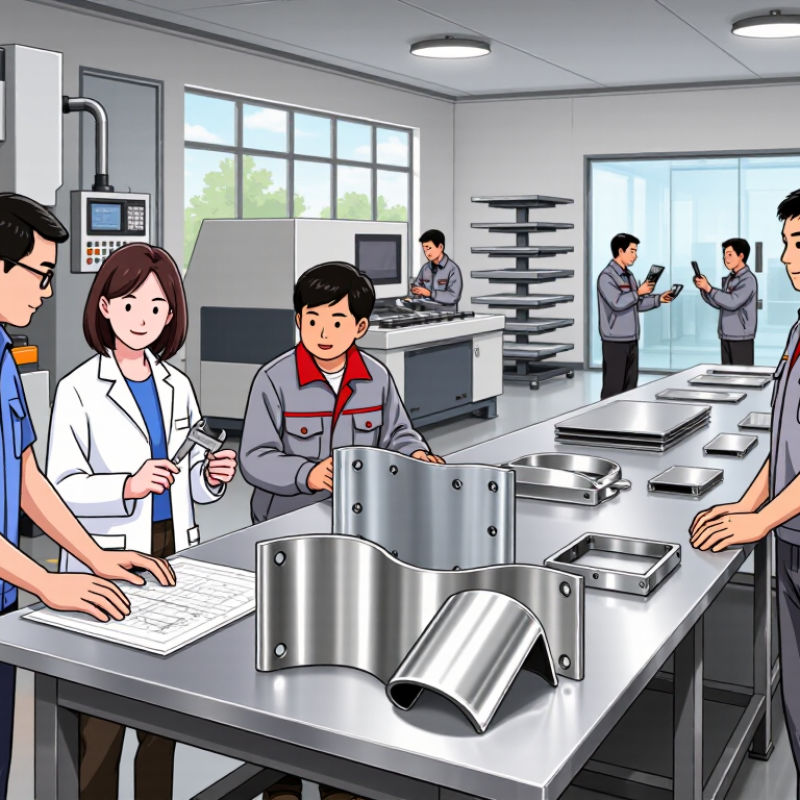
What Prototype Sheet Metal Manufacturing Involves
Prototype sheet metal manufacturing turns a digital design into a testable physical part. Engineers typically review the CAD model, choose a sheet material and thickness, then plan cutting, bending, joining, and finishing. A laser-cut blank may be only millimeters thick, yet a small bend-radius change can shift hole alignment. Small details matter.
The first prototype checks more than appearance. Teams measure flange angles, hole positions, edge quality, and fit against neighboring parts. They may use calipers, a bend gauge, or a simple assembly fixture. When a panel twists or a fastener misses its hole, the design or process needs adjustment. Not every bend cooperates. Material springback, grain direction, and tool setup can all affect the result.
Prototype runs also help teams compare manufacturing choices before committing to production tooling. Grand View Research’s Sheet Metal Market report estimated the global market at USD 265.8 billion in 2022, with a projected 4.1% compound annual growth rate from 2023 to 2030. That market figure is not a measure of prototype demand, but it reflects sheet metal’s broad industrial use. Real parts still surprise us. Recording each revision, material, and inspection result makes the next build more dependable, even when the first design looked perfect on screen.
How China’s Prototype Sheet Metal Industry Is Organized
China’s prototype sheet metal industry is organized as a flexible network, not a single factory model. Engineering teams prepare drawings and review materials, while fabrication shops turn those files into physical parts. Some shops handle laser cutting, bending, and welding under one roof. Others focus on a narrower operation and coordinate with nearby suppliers. The arrangement varies by region and by project. That matters.
A typical prototype order may pass through several hands. A buyer shares CAD files and specifications; the fabricator checks bend radii, hole positions, and material availability before quoting. After cutting, operators form panels on press brakes, then inspect fit and dimensions. Finishing providers may add powder coating or brushing when the design requires it. A small bracket can be straightforward. A cabinet with tight seams is not.
Quality practices differ, so clear drawings and agreed inspection points are essential. Buyers should ask who controls revisions, how first articles are checked, and whether finishing occurs in-house or elsewhere. Samples can reveal burrs, uneven bends, or holes that shift during assembly. The network can move quickly, but handoffs create risk. Even a minor drawing change may not reach every station at the same time. The workflow is efficient, sometimes imperfect, and worth checking closely.
Key Capabilities of Leading Chinese Manufacturers
China’s leading prototype sheet metal manufacturers combine responsive engineering with controlled fabrication. They review drawings for bend access, material thickness, hole spacing, and assembly clearance before cutting begins. Laser cutting supports detailed profiles, while CNC bending helps keep angles consistent across repeat parts. Skilled technicians still matter. A small setup error can shift a mounting hole by a few millimeters.
Strong suppliers also offer practical design feedback and traceable quality checks. They may inspect first articles with calipers, gauges, and coordinate measuring equipment, then record results against the drawing. Welding, deburring, and surface finishing should be planned around the part’s function, not appearance alone. Communication is another capability: clear updates on material availability, tolerances, and sample timing reduce surprises. Still, a polished prototype does not guarantee smooth production; that gap deserves attention.
Tips: Send a 3D model and a dimensioned drawing. Mark critical features clearly. Ask how revisions are controlled, and request inspection records for key dimensions. Small details count. A useful supplier will explain limitations instead of promising that every tolerance is easy.
China Top Prototype Sheet Metal Manufacturers: Key Capabilities
Material expertise is an important part of sheet metal prototyping. The chart compares the approximate room-temperature densities of commonly used sheet metals.
Values are approximate and can vary by alloy and grade. Material density is a reference property, not a measure of manufacturer performance.
How to Compare Prototype Sheet Metal Suppliers in China
Comparing prototype sheet metal suppliers in China starts with a controlled request for quotation. Send each supplier the same drawing, material grade, thickness, finish, quantity, and critical dimensions. Ask for unit pricing, setup charges, sample fees, and a realistic delivery schedule. The World Bank’s 2023 Logistics Performance Index ranked China 19th among 139 economies. That ranking offers context, not a factory-level delivery guarantee. UNIDO data put China’s share of global manufacturing value added at roughly 31% in 2022, but national scale cannot predict one workshop’s quality.
Check how the supplier handles laser cutting, deburring, bending, and inspection. Request a first-article sample, then examine hole positions, bend angles, edge burrs, and surface scratches against your drawing. Ask for measurement records and material traceability documents. Clarify how the shop manages drawing revisions; a prototype can become outdated after one quiet file change. Short answers are not proof of weak capability, but vague answers deserve follow-up.
Compare total project cost, not just the part price. Include packaging, freight, rework terms, and the cost of late samples. Ask who checks the part before shipment and how defects are documented. One caveat: spreadsheets can hide practical differences, such as whether a supplier flags an awkward bend before cutting metal. A brief technical review can reveal that gap. Be cautious when promised lead times omit sample approval or finishing steps; the cheapest quote may not include the same scope.
Factors to Consider When Selecting a Manufacturer
Choosing a prototype sheet metal manufacturer starts with the part, not the price. Share a clear drawing with material grade, thickness, bend angles, and critical dimensions. A 1.5-millimeter stainless panel with two tight bends may need different tooling than a flat aluminum cover. Ask how the shop checks formed parts. Calipers, angle gauges, and first-article measurements can reveal problems before a batch moves forward. Tolerances should match the part’s function. Overly tight limits can raise cost without improving fit.
Review the manufacturer’s equipment and experience with your process, including laser cutting, punching, bending, and finishing. Ask for sample inspection records or photos of comparable work, while protecting confidential design details. Communication matters, too. Can the team explain a bend allowance, flag a weak drawing, and respond when a feature changes? These details are easy to overlook. A low quote may exclude deburring, surface treatment, or packaging, so compare itemized costs and realistic lead times. Prototype work rarely runs perfectly. Leave room for one revision, and confirm how feedback will be applied to the next part. A polished sample is useful, but repeatable measurements matter more.