Who Are the Top Industrial Drone Manufacturers in China?
China has become an important center for industrial drone development, with manufacturers serving agriculture, infrastructure inspection, surveying, emergency response, and logistics. An Industrial Drone is more than an aircraft with a camera. Its value depends on reliable flight control, useful sensors, safe operation, and support after purchase. In the field, details matter: battery changes on a dusty worksite, clear images from a transmission tower, or a service team that answers when equipment fails.
This overview examines leading Chinese manufacturers through practical criteria, including product range, payload options, automation, software, manufacturing experience, and customer support. It also considers whether companies focus on complete systems or specialize in components and services. Those differences can matter more than a headline specification. A long advertised flight time, for example, may not reflect performance with a heavy sensor or in difficult weather.
There is no perfect ranking. Company claims, product availability, and performance can change, while independent test data is not always easy to compare. That limitation deserves attention. Buyers should check current specifications, request demonstrations, and assess service arrangements for their intended work. The manufacturers discussed here offer a useful starting point, not a substitute for careful evaluation. Even capable equipment may not suit every operation.
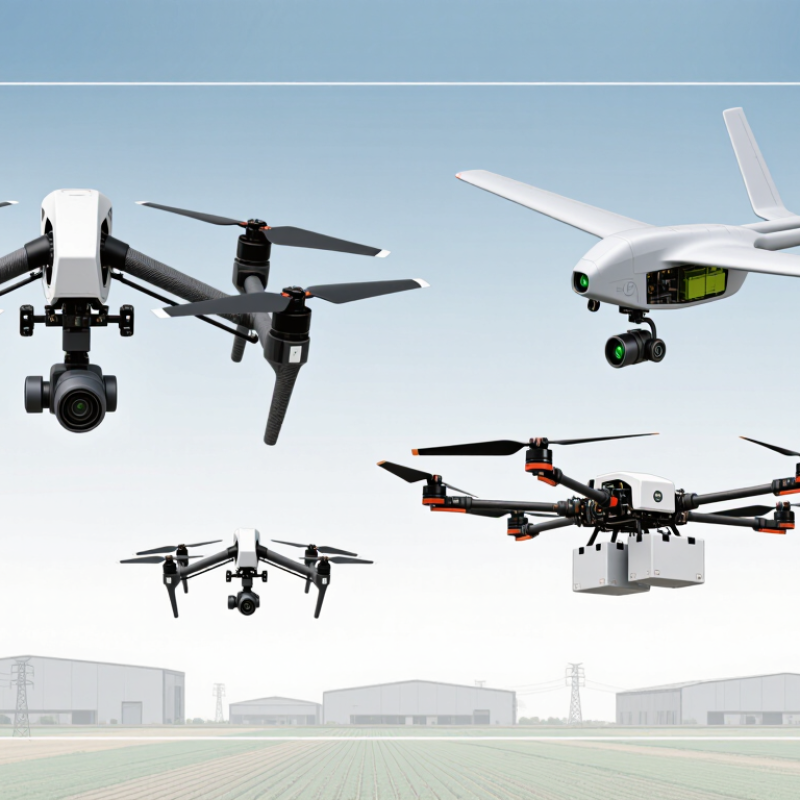
What Defines an Industrial Drone Manufacturer?
An industrial drone manufacturer builds systems for repeatable work, not merely impressive demonstrations. The aircraft should carry suitable sensors, hold stable flight in wind, and produce data that crews can check. A survey drone, for example, needs consistent positioning and usable images across a full worksite. Battery endurance matters, but so do spare-part availability, repair instructions, and clear operator training.
The manufacturer must also document how its products are tested. Look for published payload limits, environmental ratings, flight-time conditions, and maintenance intervals. These figures need context: a stated 40-minute flight time may assume a light payload and calm weather. PwC’s 2016 report, Clarity from Above, estimated that drone-enabled solutions could address $127.3 billion in labor and service costs across industries. That was a broad estimate, not a measure of drone sales, but it shows why dependable data and workflow integration matter.
Field support is part of the product. Can technicians diagnose a sensor fault quickly? Are software updates documented and reversible? Does the company provide practical guidance for safe operation? Standards and certificates help, but they do not replace evidence from real deployments. No checklist captures every muddy landing or rushed repair. That is worth admitting: industrial reliability is demonstrated over time, not promised in a brochure.
How China’s Industrial Drone Industry Is Structured
China’s industrial drone sector is not a single manufacturer market. It includes airframe and component suppliers, software developers, system integrators, and service operators. The Civil Aviation Administration of China reported 1.27 million registered civil unmanned aircraft and 23.11 million operating hours in 2023. These figures, published in its 2023 aviation industry statistical bulletin, show the scale of the wider ecosystem—not just factory output.
Manufacturers typically build around specific work: mapping, infrastructure inspection, agriculture, or emergency support. Their aircraft may carry optical cameras, thermal sensors, or surveying equipment. Integrators connect those payloads with flight-control software, data platforms, and maintenance services. Operators then turn the equipment into repeatable field workflows. A survey drone, for example, may collect images over a construction site before specialists process them into maps. The handoff matters.
The boundaries are blurry. Some suppliers provide both aircraft and software, while service firms may help shape product design through field feedback. CAAC’s operating-hour data also does not separate industrial missions from other civil use, so it should not be treated as a direct measure of industrial demand. That distinction is easy to miss. China’s market is large, but its structure is uneven: capabilities, service coverage, and data quality can differ sharply between regions. Industry reports are useful, yet their category definitions often vary.
Leading Chinese Industrial Drone Manufacturers and Their Specialties
Chinese industrial-drone manufacturers often build around specific work, rather than one aircraft for every job. Agricultural specialists prioritize stable low-altitude flight, corrosion-resistant tanks, and quick battery swaps. On a farm, those details matter: wet leaves, fine spray, and uneven field edges quickly expose weak design. Surveying manufacturers focus on camera integration, positioning accuracy, and repeatable flight paths. Inspection-focused teams typically emphasize thermal imaging, obstacle sensing, and reliable links around power lines or industrial structures.
Demand is expanding, but flight volume alone does not prove product quality. The Civil Aviation Administration of China’s 2023 Statistical Bulletin reported about 1.27 million registered civil unmanned aircraft and 23.11 million flight hours. That scale points to growing operational use, not equal performance across manufacturers. Buyers should compare payload limits, image quality, service support, and performance in their own weather and terrain. A specification sheet can look convincing. Field results matter more. I would also question claims that rely only on maximum range or spray rate; maintenance time and usable battery life are less dramatic, yet often decide whether a fleet earns its keep.
How Manufacturers Compare Across Key Industrial Applications
Industrial drone manufacturers in China should be compared by application, not by a single “best” label. PwC’s Clarity from Above (2016) estimated that drone-powered business solutions could create US$127.3 billion in annual value across industries. This was a projected value, not drone sales. The report helps explain why manufacturers face different demands in surveying, agriculture, infrastructure inspection, and delivery.
For mapping, buyers need stable flight, precise positioning, and clean survey data; a sharp camera alone is not enough. On a wind-exposed construction site, reliable positioning can matter more than extra flight speed. Crop work puts greater weight on payload capacity, field coverage, and repeatable routes. Inspection teams often need thermal sensors and detailed imagery to identify heat anomalies on equipment. Logistics platforms, by contrast, must balance payload, range, and predictable battery performance.
Different jobs, different trade-offs.
A published specification may not reflect performance in rain, dust, or signal-obstructed areas. That deserves scrutiny. Manufacturers are easier to assess when test conditions, sensor accuracy, maintenance needs, and data compatibility are documented for the intended task.
Factors to Consider When Choosing a Chinese Drone Manufacturer
Choosing a Chinese industrial drone manufacturer means testing more than advertised flight time. The Civil Aviation Administration of China reported 1.267 million registered civil unmanned aircraft and 23.11 million flight hours in 2023. That scale makes after-sales support, training, and replacement-part availability important questions. Ask for documented endurance under your expected payload, wind, and temperature—not just an ideal-condition figure. Request a sample flight log and inspect how the aircraft handles a lost connection or low battery. Test it in person.
Tips: Compare suppliers using the same checklist: payload capacity, operating range, battery cycle life, repair turnaround, software updates, and data-handling options. Ask for maintenance records and a written warranty. If the manufacturer cannot explain how it tests a sensor mount or seals a camera housing against dust, pause. A polished demo is useful, but it is not proof of consistent production quality.
Check whether the supplier can provide traceable component specifications, quality-control records, and clear technical documentation in English. For projects involving mapping or inspection, request sample outputs and verify resolution against your actual task. A factory visit or independent inspection can reveal details a brochure misses, such as spare-part stock and assembly checks. Even then, one visit is only a snapshot; confirm performance across several units.