Top CNC Machining Centers Manufacturers in China
China has become a major source of machining equipment, from compact vertical mills to large five-axis production systems. Yet comparing manufacturers takes more than scanning catalogs. Buyers need to examine machine structure, spindle performance, control options, service coverage, and the parts each model can produce. Details matter.
Shigeo Shingo, an influential industrial engineer, wrote, “The most dangerous kind of waste is the waste we do not recognize.” That warning applies to machine selection: a low purchase price may conceal setup delays, inconsistent tolerances, or hard-to-source components. For this guide to Top CNC Machining Centers Manufacturers in China, we focus on practical evidence, including product range, technical documentation, export experience, and reported after-sales support. These indicators help frame comparisons; they do not replace an independent factory visit or a test cut on your material.
The companies featured represent different capabilities, not a universal ranking. Some serve high-volume automotive work, while others specialize in precision components, molds, or flexible job shops. A buyer should match machine travel, tool capacity, and accuracy claims to actual part drawings and production targets. Ask for sample machining results, maintenance requirements, and clear details about warranty coverage. Not on paper alone. Published specifications may not reflect a machine’s performance under a particular workload, and supplier information can change. That uncertainty deserves attention. By treating Cnc Machining Centers as production investments rather than catalog items, readers can build a shortlist grounded in application fit, verifiable claims, and realistic service expectations.
What Defines a CNC Machining Center?
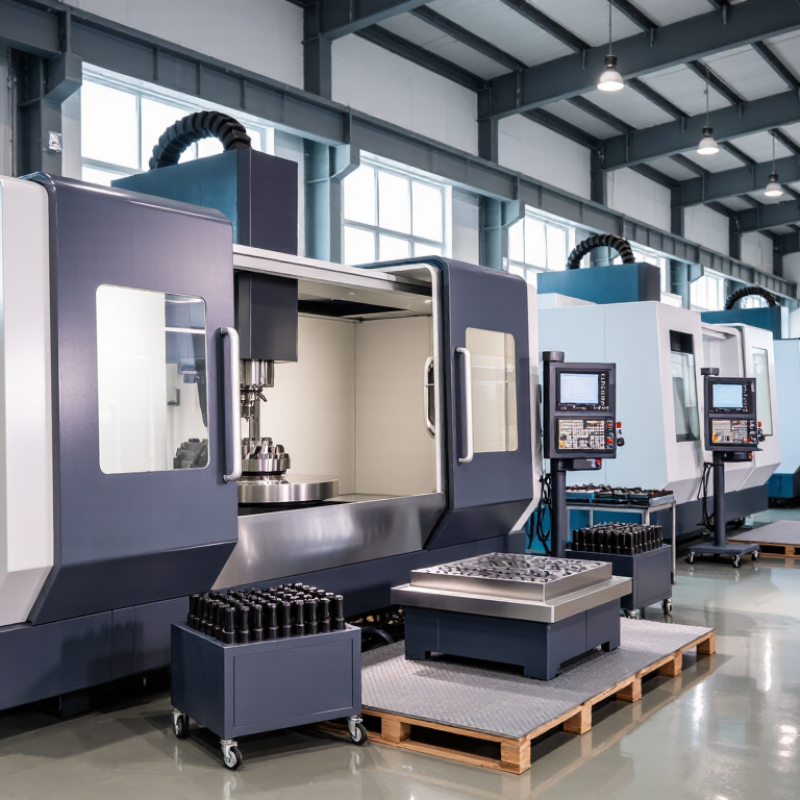
A CNC machining center is more than a machine that follows programmed coordinates. It combines computer numerical control with an automatic tool changer, allowing one setup to handle operations such as milling, drilling, and boring. The workpiece stays clamped while tools move between cuts. That matters: fewer manual transfers can reduce setup variation, though they do not guarantee accuracy.
A useful definition also includes the machine’s structure and performance. Vertical and horizontal centers arrange the spindle differently, affecting chip removal, access, and suitable part geometry. The ISO 10791 series specifies test conditions and accuracy checks for machining centers; buyers can use these methods to compare measured performance, not just brochure claims. The International Federation of Robotics’ World Robotics 2024 report counted 4,281,585 industrial robots operating worldwide in 2023. That figure describes factory automation broadly, not machining centers alone, but it shows why machine cells increasingly need dependable interfaces and repeatable processes. Still, a precise machine can produce poor parts when tools wear or fixtures shift.
Tips: Ask for a test cut using your material, drawing, and tolerance. Check tool-change time, spindle condition, and accuracy records. Small details matter. I would also leave time for a second review; specifications can look clear while shop-floor needs remain overlooked.
Top CNC Machining Centers Manufacturers in China — What Defines a CNC Machining Center?
A CNC machining center is a computer-controlled machine tool commonly equipped with an automatic tool changer. Its axis configuration describes the directions of movement: standard 3-axis machines use three linear axes, while 4- and 5-axis configurations add one or two rotary axes. These are common configurations, not a measure of machine quality or capability.
What Types of CNC Machining Centers Are Made in China?
China’s CNC machining centers include vertical, horizontal, gantry, and multi-axis designs. Vertical machining centers suit plates, molds, and compact components. Their spindle approaches the workpiece from above, making setup and tool access familiar to many operators. Horizontal models often handle heavier parts and support pallet changes, which can reduce idle time during production. Small details matter.
Gantry centers provide a wide working area for long panels, large molds, or structural components. Five-axis machines tilt or rotate the workpiece, allowing several surfaces to be cut with fewer setups. This can improve alignment, though programming and fixture planning become more demanding. Some Chinese manufacturers also produce drilling and tapping centers for high-volume parts with repeated holes. Capabilities vary, so a machine’s label alone tells little about its real performance.
Tips: Match the machine’s travel, spindle speed, and load capacity to your actual parts. Ask for a sample cut using similar material and tooling. Check chip removal, guarding, and measurement results. A faster machine is not always the better fit. Tool access can still be awkward, even on advanced models.
How to Evaluate CNC Machining Center Manufacturers in China
Evaluating CNC machining center manufacturers in China starts with the parts you need to make. Share drawings, materials, tolerances, and expected production volumes. Ask how a machine handles your specific cutting conditions, not just its maximum spindle speed. Request test-cut results and measurement records for a part similar to yours. Numbers matter. Check positioning and repeatability data, then ask how those figures were measured. A polished showroom can look reassuring, but it does not prove stable performance during a long production run. If possible, inspect the assembly area and observe a machine cutting material.
Assess quality control through evidence. Ask how incoming components are checked, how final machine tests are recorded, and what happens when a test fails. Clarify installation support, spare-part availability, training, and response times before agreeing on a purchase. Good answers are specific. Compare the quotation with the full specification, including tooling, software, packaging, and commissioning. Communication deserves attention too: unresolved technical questions during ordering may become harder to manage after delivery. No supplier is flawless, and a single visit cannot reveal everything. Note what remains uncertain, request written clarification, and weigh that risk against the machine’s capabilities and your own production needs.
Leading CNC Machining Center Manufacturers in China
Top CNC Machining Centers Manufacturers in China
Leading CNC Machining Center Manufacturers in China
Leading CNC machining center manufacturers in China stand out through consistent engineering, practical customization, and dependable process control. A useful supplier can explain how spindle speed, tool capacity, and axis travel match a specific part, rather than simply presenting impressive specifications. Ask how machines are inspected before shipment and what documentation accompanies them. Clear answers matter. For example, machining a steel housing with deep pockets places different demands on rigidity and chip removal than producing small aluminum components. Catalogs rarely tell the whole story, and that is worth remembering.
Tips: Share sample drawings, material grades, tolerances, and expected production volumes before requesting a quotation. Ask for a test cut or inspection records when feasible. Compare service response times, not only machine prices.
During supplier evaluation, look for evidence of stable production practices, such as documented assembly checks and repeatable accuracy measurements. Discuss installation, operator training, spare parts, and technical support in specific terms. A factory visit or live video walkthrough can help clarify how equipment is assembled and tested. Still, one demonstration cannot guarantee long-term performance. I would treat it as one useful data point, then verify the details that matter to your operation.
How Chinese Manufacturers Compare in Technology and Service
Chinese machining-center manufacturers vary more in execution than in brochure specifications. The International Federation of Robotics’ World Robotics 2024 report recorded 276,288 industrial robot installations in China in 2023, about 51% of the global total. This reflects a large automation ecosystem, not equal performance across every machine builder. Numbers need context. Compare positioning accuracy, thermal compensation, spindle test results, and the controller’s ability to hold tolerances during long cutting cycles. ISO 230-2:2014 provides a recognized method for testing numerically controlled axis positioning accuracy.
Service can be the bigger differentiator after installation. Ask how quickly technicians respond, whether critical parts are stocked locally, and what remote diagnostics actually include. Request a sample acceptance report and a clear maintenance schedule. A polished factory tour is useful, but it cannot replace watching a machine cut your material. Supplier claims may look cleaner than shop-floor reality; insist on a trial using your drawing, tooling, and tolerance requirements.
Tips: Compare the same workpiece on each shortlisted machine. Record cycle time, surface finish, dimensional drift, and support response time. Keep the results in writing. A small test can expose gaps that a long specification sheet misses.