
Engineer's Toolbox Visit www.hansarobotics.com

Category Banner

Top 10 High Quality Cabinet Hardware Brands for Buyers

Cabinet hardware is small in scale, but it meets the hand every day. A loose pull, sharp edge, or worn finish can change how a kitchen feels. Buyers comparing the Top 10 High Quality Cabinet Hardware Brands need more than attractive product photos. They need evidence of durable finishes, consistent sizing, dependable warranties, and replacement-part support.

Industry reports offer useful context. The NKBA’s 2024 Kitchen Trends Report and Houzz’s 2024 U.S. Kitchen Trends Study track renovation priorities, including cabinetry, storage, and material choices. They do not rank hardware brands, so this guide treats them as context—not proof of product performance. That distinction matters. A market trend cannot tell you whether a drawer pull will loosen after years of use.

Designer Charles Eames offered a fitting principle: “The details are not the details. They make the design.” For cabinet hardware, those details include grip comfort, mounting quality, and how a finish looks beside real wood or painted doors. This guide compares brands through those practical criteria, alongside design range and buyer support. Still, no ranking replaces a hands-on test. A polished finish can disappoint under daily use, and even a respected brand may not suit every kitchen. High Quality Cabinet Hardware should feel right in the hand, not merely photograph well.
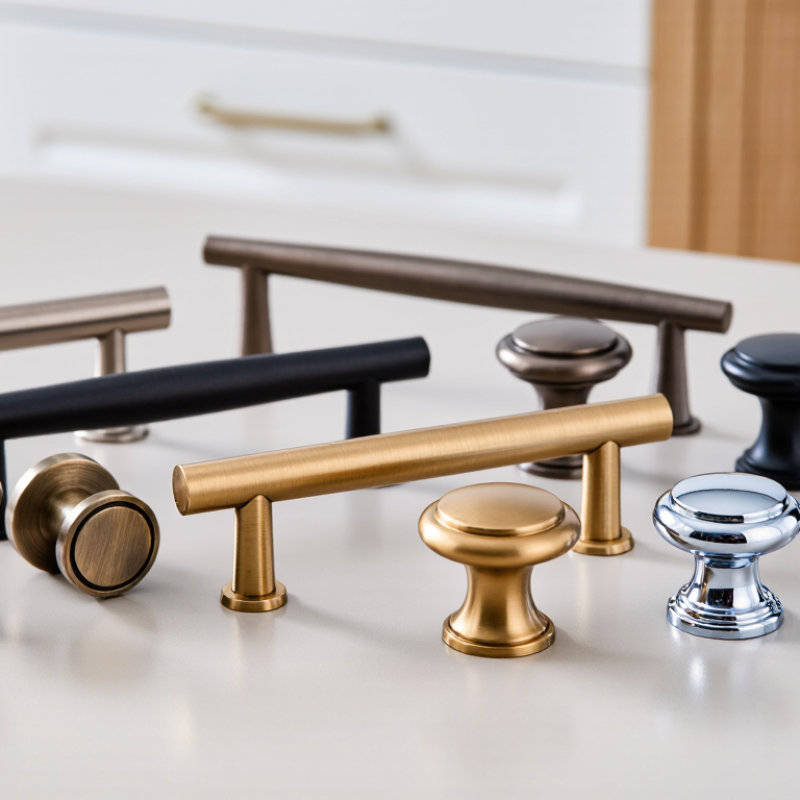
Top 10 High Quality Cabinet Hardware Brands for Buyers

What Cabinet Hardware Includes and Why Quality Matters

Cabinet hardware includes more than visible knobs and pulls. Hinges control how doors open, while drawer slides support weight and guide movement. Latches and catches help keep doors closed. These small parts affect daily comfort, noise, and cabinet life. A pull with rounded edges feels gentler on busy hands. A hinge that stays aligned helps prevent doors from rubbing or sagging.

Quality matters most where hardware moves or bears weight. Look for sturdy construction, smooth finishes, and secure mounting points. Check that drawer slides match the drawer’s dimensions and expected load. For hinges, confirm the opening angle and overlay fit before buying. Even attractive hardware can disappoint if screws loosen or finishes wear quickly. Details matter. Still, appearance is not a perfect guide; a polished surface may hide weak construction.

Tips: Measure existing holes before choosing new knobs or pulls. Open and close sample hardware several times, if possible. Listen for grinding, feel for wobble, and check how smoothly drawers travel. Keep a spare screw or two; small parts have a habit of disappearing.

Criteria for Evaluating Cabinet Hardware Brands

Choosing cabinet hardware requires more than a polished finish. Assess the base material, coating, and construction together. Solid metal may feel reassuring, but weight alone proves little. Inspect hinges and drawer slides for smooth movement, even gaps, and secure mounting points. Look closely at corners and screw holes; thin plating may wear there first.

Test samples under ordinary use. Open a drawer repeatedly with a typical load, then check for sagging, scraping, or loose screws. Quiet movement matters, but it should not hide weak alignment.

Ask for cycle-test data, corrosion-resistance details, and clear warranty terms. Useful specifications beat vague claims. Still, lab results cannot predict every kitchen’s humidity or cleaning habits.

Check dimensional drawings before ordering. Measure door thickness, overlay, hole spacing, and available clearance, then compare them with installation instructions. Confirm replacement-part availability and whether finishes vary between production batches.

A well-made pull can disappoint if its edges feel sharp or its projection catches clothing. Feel the edges. Consider how the hardware feels with wet hands and whether routine cleaning leaves residue. Some judgments remain subjective, so compare samples in the actual room’s light before placing a large order.

Profiles of Ten High-Quality Cabinet Hardware Brands

These ten anonymous profiles compare high-quality cabinet hardware by construction, finish, fit, and service—not by name recognition.

Harvard’s Joint Center for Housing Studies reported that U.S. homeowners spent $472 billion on improvements and repairs in 2022. That broad figure is not specific to cabinet hardware, but it shows the scale of home investment and why durable details matter.

One profile centers on precision-machined pulls with smooth edges and consistent hole spacing. Another favors solid-brass knobs that develop a natural patina. A third prioritizes corrosion-resistant steel for busy kitchens.

The fourth offers dependable basics at accessible prices. The fifth specializes in traditional shapes and carefully matched finishes. Details matter. A sixth focuses on contemporary, low-profile designs. A seventh pairs coordinated knobs, pulls, and hinges.

An eighth emphasizes clear installation guidance and replacement parts. The ninth offers custom dimensions for unusual cabinetry. The tenth balances a broad finish range with reliable stock availability.

Not always.

Even an attractive finish may show fingerprints or wear sooner than expected. Buyers should compare material specifications, coating-care instructions, warranty terms, and sample pieces under their own lighting. A small mismatch in screw length or finish can be frustrating, and product descriptions do not always reveal it.

Comparing Materials, Finishes, Styles, and Price Ranges

Cabinet hardware should be judged by touch as well as appearance. Zinc-alloy knobs often sit in a lower price band, roughly US$2–$8 each; stainless-steel pulls commonly cost US$5–$20, while solid-brass or custom pieces can reach US$10–$50 or more. These are broad retail estimates, not fixed market prices. Size, construction, and finish change the bill.

Materials behave differently. Stainless steel suits busy kitchens and resists corrosion; brass feels weightier, but its surface may develop a patina. The USGS Mineral Commodity Summaries 2024 reports an average U.S. copper price of about US$3.85 per pound in 2023, down from US$3.99 in 2022. That is a raw-material benchmark, not a hardware price. Still, it helps explain why metal content can affect cost. Finish matters, too: brushed nickel hides fingerprints better than polished chrome, while matte black creates stronger contrast on pale cabinet doors. Coating quality varies.

Style changes the feel of a room. Slim bar pulls suit flat-front cabinets; rounded knobs soften shaker-style doors. Compare the backplate, edge smoothness, and screw fit—not just the product photo. A finish sample beside the actual cabinet is useful. Small details matter. I would not assume a higher price guarantees a longer-lasting coating; ask about care instructions and finish warranties before ordering.

Typical Cabinet Pull Price Ranges by Material

Indicative retail prices in USD per cabinet pull. Actual prices vary by size, design, finish, and retailer.

Solid brass pulls typically sit at the higher end of these material-based ranges, while zinc-alloy options are often more budget-friendly. These are general estimates, not brand-specific prices.

Matching a Cabinet Hardware Brand to Your Project Needs

Choosing a cabinet hardware brand should begin with the room, not a catalog ranking. A busy kitchen needs pulls that feel comfortable with wet hands and withstand frequent cleaning. A guest-room dresser may need less robust hardware, but its finish should still suit nearby lighting and furniture. Start by noting cabinet material, door thickness, expected use, and cleaning habits. Small details matter.

Compare more than appearance. Check the stated base material, finish process, dimensions, and installation requirements. For a renovation, confirm that the screw length fits the cabinet door and that replacement parts are available. A sample can reveal whether a brushed finish looks too warm beside a countertop or shows fingerprints under task lighting. Test the grip, too. Product descriptions rarely tell the whole story.

Project constraints also shape the right choice. A contractor may value consistent sizing and dependable restocking, while a homeowner may prioritize tactile comfort and a specific finish. Request clear specifications and warranty terms, then compare them with the project schedule and budget. In practice, I would check several pieces from the same finish before ordering a full set; color can vary slightly between batches. I still find that easy to overlook. A sensible match balances durability, fit, appearance, and service—not prestige alone.