
Engineer's Toolbox Visit www.hansarobotics.com

Category Banner

7 Tips for Choosing the Best Dado Blade Set

Choosing the right Dado Blade Set can change a rough cabinet project into a clean, repeatable build. The choice is not only about tooth count or price. Arbor size, maximum dado width, chip clearance, blade sharpness, and compatibility with your table saw all matter. A set that looks impressive online may still produce uneven shoulders on your plywood. That happened to many experienced woodworkers, including me.

Woodworking educator Marc Spagnuolo captures the principle well: “A clean dado starts with a stable setup, not a rushed cut.” His point is practical. Before cutting expensive maple, test the Dado Blade Set on scrap material. Check whether the groove fits the shelf without forcing it. Measure the actual width, because stacked blades and shims rarely match their printed numbers perfectly. Small errors matter. Very much.

This guide, “7 Tips for Choosing the Best Dado Blade Set,” focuses on decisions you can verify in a real workshop. It considers flat-bottom performance, anti-vibration design, carbide quality, adjustment flexibility, and manufacturer guidance. Safety remains essential. Confirm your saw’s manual, guard requirements, permitted blade specifications, and local regulations before use. Never assume every saw accepts every dado configuration.

Some recommendations may seem obvious. They are still easy to overlook. A premium set cannot correct a misaligned fence or unstable workpiece. The ideal choice depends on your saw, materials, projects, and skill level. There is no perfect set for everyone. Careful testing, honest measurement, and a willingness to reconsider your first choice usually produce better results.
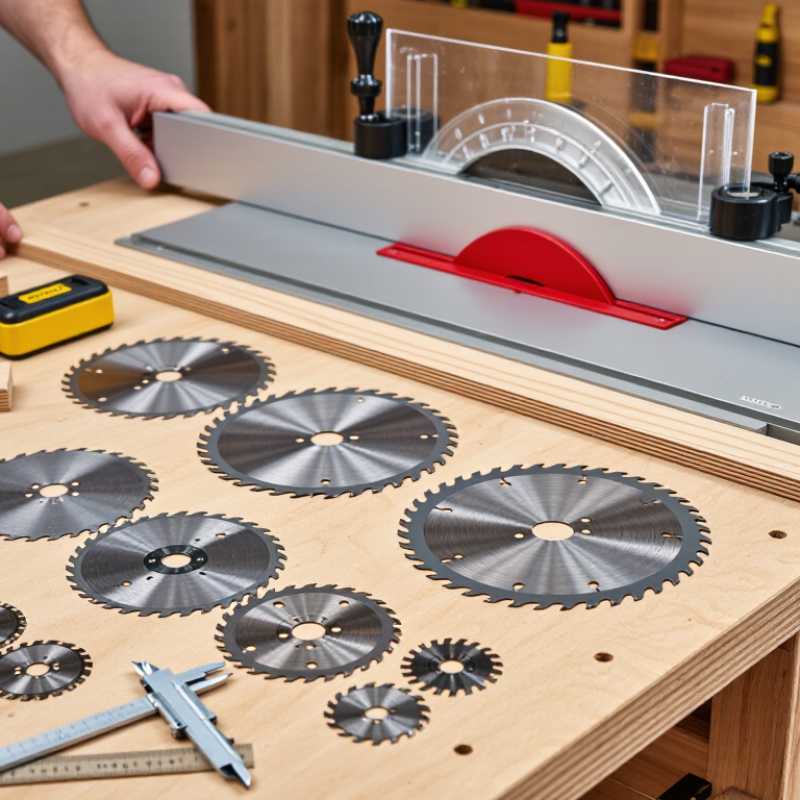
7 Tips for Choosing the Best Dado Blade Set

Understanding Dado Blade Types and Their Cutting Applications

Choosing the best dado blade set starts with understanding how each design removes wood. A stacked Dado Set uses two outer blades and adjustable chippers. It produces flat-bottomed grooves when the chippers align correctly. This setup suits dados, rabbets, grooves, and some tenon shoulders. A wobble dado blade tilts during rotation, creating an angled cut. It is simpler to adjust, but its bottom may show a shallow arc. That detail matters on visible shelving.

Match the blade type to the material and the cut width. Thin plywood often needs a narrower setting to avoid oversized joints caused by its actual core thickness. Solid hardwood may require slower feed pressure and several passes, especially for wide dados. Check the arbor length, maximum dado width, and saw manual before installing any set. These are not optional details. Tooth geometry also affects results: flat-top teeth leave cleaner shoulders, while general-purpose profiles may cut faster but leave more cleanup. Measure scrap first. A test board can expose a bad assumption before the cabinet does.

I once treated the printed width as exact, then found a joint was slightly loose after finishing. Wood movement and finish thickness had been ignored. That mistake changed my process. I now measure the mating piece, calculate the required kerf, and inspect the first cut under side lighting. Chipper spacing can also leave ridges, so slight hand fitting may be necessary. It is not a defect in every set, but it deserves attention. Choose carbide teeth, secure assembly, and a stable zero-clearance insert when the saw permits it. Clean, repeatable cuts come from matching the blade’s action to the joint, not from width alone.

Matching Blade Size and Kerf to Your Table Saw

7 Tips for Choosing the Best Dado Blade Set

Matching blade size and kerf to your table saw prevents unstable cuts and damaged material. Check the saw manual before buying any set. Confirm the maximum dado diameter, permitted width, and arbor length. A larger blade is not automatically better. It may exceed the saw’s guard or throat plate clearance.

Measure the arbor’s usable length with the spacers installed. The nut should engage several full threads. Do not force a wide stack onto a short arbor. Add the chippers and outer blades gradually, then measure the total width with calipers. Kerf matters more than labels. A “half-inch” setup may cut slightly wider or narrower than expected. Wood species, blade geometry, and sharpening condition can change the result. Small differences matter.

Choose a full-kerf or thin-kerf set that matches your saw’s cutting capacity. Thin-kerf blades reduce strain, but they may require different chippers or spacers. Check the arbor hole and ensure every component sits flat. I once trusted the marked width and skipped a test cut. The groove was visibly loose. That mistake was avoidable. Test on scrap wood first, and inspect the dado with the mating board. Follow the saw’s instructions about guards, riving knives, and dado-compatible throat plates. If the setup feels tight, stop and reassess. Safety is part of accuracy.

7 Tips for Choosing the Best Dado Blade Set: Matching Blade Size and Kerf to Your Table Saw

Common dado widths range from 1/4 inch to 3/4 inch. Choose a set whose assembled width matches the groove required by your project, and confirm that the blade diameter and maximum cutting depth are permitted by your table saw. Standard 1/8-inch chippers and outer blades with approximately 0.098–0.125-inch kerfs are commonly combined to build these widths. Always verify the manufacturer’s arbor, diameter, guard, and maximum dado-width specifications before use.

Evaluating Tooth Design, Materials, and Cutting Performance

7 Tips for Choosing the Best Dado Blade Set

To choose a dado blade set, inspect tooth geometry before counting teeth. Flat-top teeth produce clean grooves with square shoulders. A chipper with alternating bevels can reduce tear-out in plywood. More teeth do not always mean smoother cuts. Kerf width must also match your saw’s arbor and throat plate. Measure the kerf.

I compare carbide quality, brazing, and plate stiffness under real shop conditions. The USDA Forest Products Laboratory’s Wood Handbook, 2021 edition, reports wood density ranging from about 160 to over 1,000 kg/m³. That range explains why one tooth pattern cannot suit every species. Hard, dense stock needs durable carbide and stable support. The U.S. Department of Energy’s Building America guidance places typical interior wood near 6–8% moisture content. Moisture changes can affect groove accuracy.

Check one: choose a flat-bottom profile for joinery.

Check two: select a raker design for cleaner chip removal.

Check three: verify carbide thickness and brazing quality.

Check four: match the set to your saw’s power.

Check five: inspect runout before cutting expensive panels.

Check six: test plywood and solid wood separately.

Check seven: measure the finished groove with calipers.

I still see tear-out when feed pressure becomes uneven. That mistake is easy to repeat.

Cutting performance depends on tooth design, material quality, alignment, and a steady feed—not tooth count alone.

Checking Compatibility, Safety Features, and Adjustment Options

7 Tips for Choosing the Best Dado Blade Set

Compatibility should be checked before tooth count or price. Measure your saw’s arbor length, arbor diameter, and maximum dado width. Then compare these measurements with the blade set’s specifications. The set must also match your saw’s rated speed and power. Some table saws cannot accept dado stacks at all. Read the owner’s manual carefully. I once assumed a wider stack would fit because the arbor looked long enough. That assumption was wrong.

Tip: Make a dry fit with the saw unplugged. Confirm that the blades, chippers, and shims sit securely without side-to-side movement. Check whether the blade guard, throat plate, and riving knife can be used as instructed. Never force a standard plate to fit. A custom zero-clearance insert may be required, but it must leave enough room for the stack.

Safety features deserve practical testing, not just attractive packaging. Look for clearly marked rotation direction, balanced components, secure chipper teeth, and precise spacers. Adjustment options also matter. A useful set should allow small width changes through different chippers and shims. Test the stack on scrap wood before cutting your project. Use eye and hearing protection, keep hands away from the cut, and disconnect power before every adjustment. My own early cuts were usable, but not perfectly flat. That showed me that careful setup matters more than speed.

Comparing Durability, Accuracy, and Overall Set Value

Choosing a dado blade set requires more than counting cutters. Durability, accuracy, and total value must work together. The U.S. Forest Products Laboratory’s Wood Handbook, FPL-GTR-282, explains that wood movement varies with moisture, species, and grain direction. Even an excellent set cannot correct unstable stock.

Tip 1: test on the actual plywood or hardwood.
Tip 2: check carbide edges under bright light.
Tip 3: reject visible chips or uneven brazing.
Tip 4: measure the assembled width with calipers, not the package label.

Accuracy depends on repeatable spacers and flat chippers. A small error can leave a joint too tight, forcing sanding and weakening the fit. The 2024 Grand View Research power-tools report projects continued market growth through 2030, but market expansion does not prove better cutting precision. I still overvalue polished cases sometimes. That is a costly habit.

Tip 5: compare measured widths across three assemblies.
Tip 6: inspect the storage case for protected edges and clear size markings. A dependable set should also allow quick, consistent adjustments.

Overall value includes service life, usable width range, and waste reduction. OSHA’s woodworking safety guidance highlights kickback and ejected stock as key hazards, so stability matters more than a low purchase price.

Tip 7: choose a set with secure clamping, balanced components, and clear operating limits.

Record the first cut, inspect the groove walls, and note burning or vibration. Reports provide useful standards, but your material, saw alignment, and technique still decide the result.

Article Source: