Top Tips for Choosing the Right Slewing Bearing for Your Project?
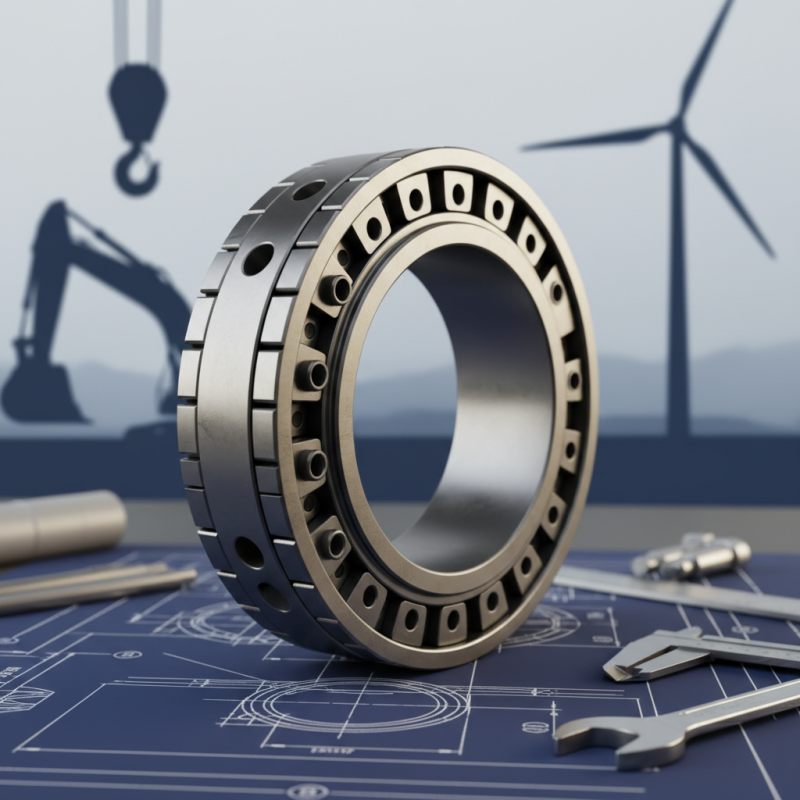
When embarking on a project that requires a slewing bearing, the choices can feel overwhelming. Selecting the right device is crucial for ensuring the productivity and stability of your operation. A slewing bearing is vital for equipment like cranes, excavators, and wind turbines, which rely on precise motion control.
However, not all slewing bearings are created equal. Factors such as load capacity, size, and material impact performance greatly. It's essential to consider your project's specific demands to make an informed choice. Many engineers overlook these details, leading to inefficiencies or failures. A thorough evaluation of your requirements will help avoid costly mistakes.
In this guide, we’ll explore essential tips for choosing a slewing bearing. We will highlight key features to prioritize and common pitfalls to avoid. By combining experience with knowledge, you can achieve optimal results for your project. Understanding these nuances will empower you to make a smarter decision.
Understanding the Basics of Slewing Bearings and Their Applications
Slewing bearings are critical components in various machinery applications. They support rotary motion and bear axial loads. Understanding their basic types and applications is crucial for engineers. Market reports show a steady growth in the slewing bearing industry. By 2027, the global market is expected to reach $4.2 billion. This growth emphasizes the need for reliable bearing selection.
Various applications include construction equipment, wind turbines, and cranes. Each application has specific requirements. For example, offshore cranes require corrosion-resistant bearings. The right material choice impacts longevity and performance. Observations indicate that improper selection can lead to failures, costing projects time and money.
Engineers often struggle with choosing the right slewing bearings. Factors like load capacity, speed, and environmental conditions can complicate decisions. Data suggests that nearly 30% of projects face delays due to bearing issues. Those responsible must consider each variable carefully. Ultimately, understanding the basics helps avoid costly mistakes.
Top Tips for Choosing the Right Slewing Bearing for Your Project
| Bearing Type |
Load Capacity (kN) |
Inner Diameter (mm) |
Outer Diameter (mm) |
Applications |
| Single Row Ball Bearing |
50 |
100 |
200 |
Cranes, Construction Equipment |
| Double Row Ball Bearing |
80 |
120 |
250 |
Rotary Tables, Wind Turbines |
| Cross Roller Bearing |
100 |
150 |
300 |
Robotics, Aerospace Applications |
| Four Point Contact Ball Bearing |
120 |
130 |
270 |
Heavy Machinery, Industrial Applications |
| Slewing Ring Bearing |
200 |
160 |
320 |
Excavators, Stackers |
Factors to Consider When Selecting a Slewing Bearing
When selecting a slewing bearing, several factors must be considered to ensure optimal performance.
Load capacity is crucial. Slewing bearings usually support heavy loads and need to be rated appropriately.
According to industry reports, nearly 40% of operational failures can be traced back to inadequate load specifications.
Assessing the specific load conditions for your project is essential.
Another factor is the speed of operation. Slewing bearings are often subjected to dynamic loads.
Their performance can significantly vary with different rotational speeds. Studies indicate that a mismatch between bearing design and operational speed accounts for up to 20% of faults.
It is, therefore, vital to analyze the intended speed range and select a bearing designed to accommodate fluctuating movements.
Environment plays a major role too. Exposure to harsh conditions—such as extreme temperatures, dust, or moisture—can degrade bearing performance.
Data shows that environmental factors lead to about 15% of premature bearing failures.
Consider implementing protective features like seals or coatings based on the environmental context of your project.
Balancing these considerations will lead to more reliable and efficient projects.
Evaluating Load and Stress Requirements for Your Project
When choosing a slewing bearing, understanding load and stress requirements is crucial. Slewing bearings experience complex load combinations, including radial, axial, and moment loads. According to industry reports, over 30% of bearing failures stem from inadequate load specifications. Therefore, accurately predicting these loads can significantly extend the service life of the bearing.
Evaluating your project's specific demands is key. For example, a construction crane may face varying load conditions during operations. These fluctuations require thorough analysis to prevent premature failure. It's vital to consider factors such as dynamic loads, static loads, and environmental conditions like temperature and humidity, which can affect material performance.
Additionally, it's common to underestimate stress factors during the design phase. Stress analysis helps identify critical areas that require reinforcement. Ignoring these elements can lead to serious operational failures. Regular testing and evaluation throughout the project lifecycle can provide valuable insights. Balancing load requirements with design specifications ensures optimal performance of slewing bearings.
Material Selection: Choosing the Right Bearings for Durability
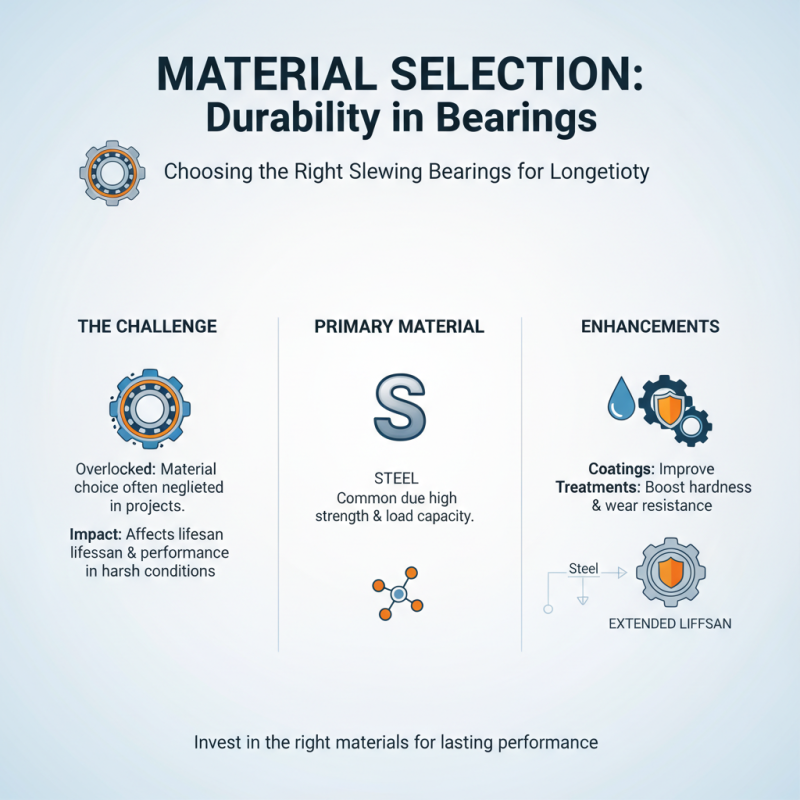
Selecting the right material for slewing bearings is crucial for durability. Many projects overlook this aspect. The material impacts the bearing's lifespan and performance in harsh conditions. Steel is commonly used due to its strength. However, coatings and treatments can enhance corrosion resistance.
Different environments require different materials. For instance, marine applications often use stainless steel. It resists saltwater corrosion effectively. On the other hand, in industrial settings, hardened steel may have the edge. Although it’s more durable, it can be heavier and less adaptable.
Testing materials is often overlooked. Not all materials perform well under stress. Each project has unique requirements. Observing how bearings behave in real scenarios can provide valuable insights. Sometimes, the ideal material comes from unexpected sources. It's essential to tailor material selection to specific project needs. Keeping an open mind can lead to innovative solutions.
Maintenance and Lifespan: Ensuring Longevity of Slewing Bearings
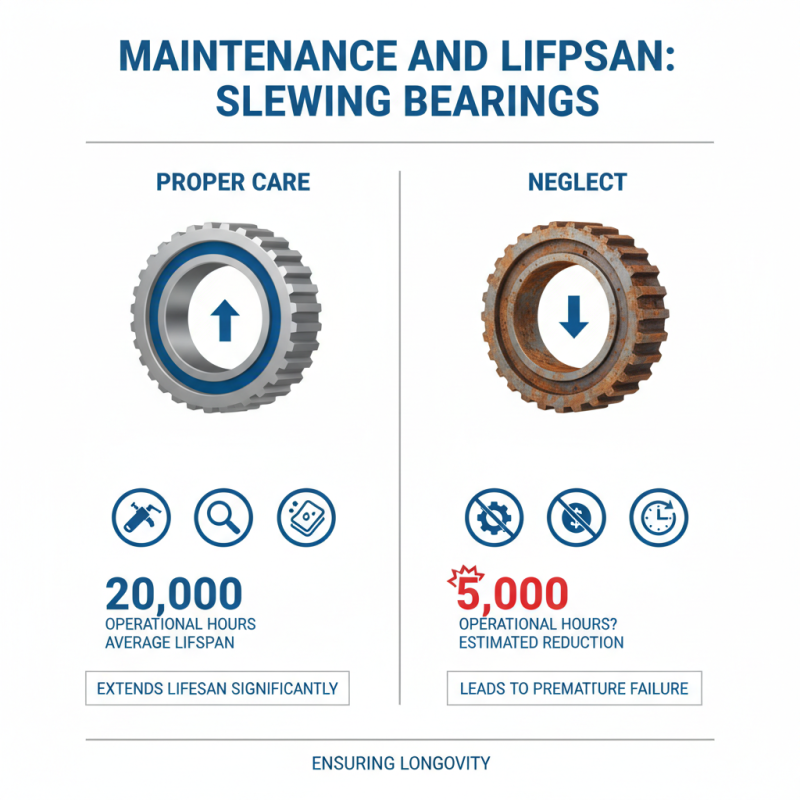
When selecting a slewing bearing, maintenance and lifespan are crucial considerations. Proper care can significantly extend a bearing's life. According to industry reports, the average lifespan of a well-maintained slewing bearing can reach up to 20,000 operational hours. In contrast, neglect can lead to premature wear and costly replacements.
Regular inspections are essential. Check for signs of wear or irregularities such as noise or play. Implementing a lubrication schedule based on manufacturer recommendations helps maintain optimal performance. It is typically suggested to lubricate every 500 hours of operation. Additionally, sealing integrity should be monitored. A damaged seal can allow contaminants to enter, reducing bearing lifespan.
Selecting the right slewing bearing also depends on specific project needs. Factors like load capacity, speed, and environmental conditions should be assessed. It is key to consult with experts in the field for tailored advice. They can provide insights based on similar applications. Understanding the operational environment is vital. Heavy loads and extreme temperatures can affect bearing performance. Each aspect contributes to ensuring longevity and reliability, ultimately benefiting your project's success.