Engineer's Toolbox Visit www.hansarobotics.com

Category Banner

7 Lead Screw Buying Tips for Global Buyers

A lead screw can look simple on a supplier’s product page: a threaded shaft, a matching nut, and a few listed dimensions. The right choice, however, depends on how the assembly will perform in its actual machine. Load, travel distance, speed, positioning accuracy, and duty cycle all affect what specifications matter. A screw selected for a light adjustment mechanism may not suit a compact lifting table. Small details matter.

Global buyers also need to compare more than unit prices. Material grade, surface finish, nut design, lubrication needs, and stated tolerances can influence service life and maintenance. Ask suppliers for current drawings and technical data, then check that the dimensions match your design. Where practical, review samples before approving a larger order. A sample is useful, but it cannot prove every production run will be identical.

Clear communication deserves equal attention. Confirm the thread form, lead, shaft length, end machining, quantity, packaging, and inspection requirements in writing. Discuss production consistency and how the supplier handles questions or specification changes. Shipping schedules can shift, too, so build reasonable time into project planning. Not always predictable. These seven buying tips offer a practical way to evaluate options, ask more precise questions, and reduce avoidable mismatches. They are not a substitute for engineering review; unusual loads, speeds, or operating conditions may call for a qualified designer’s input.
7 Lead Screw Buying Tips for Global Buyers

Understanding Lead Screws and Their Applications

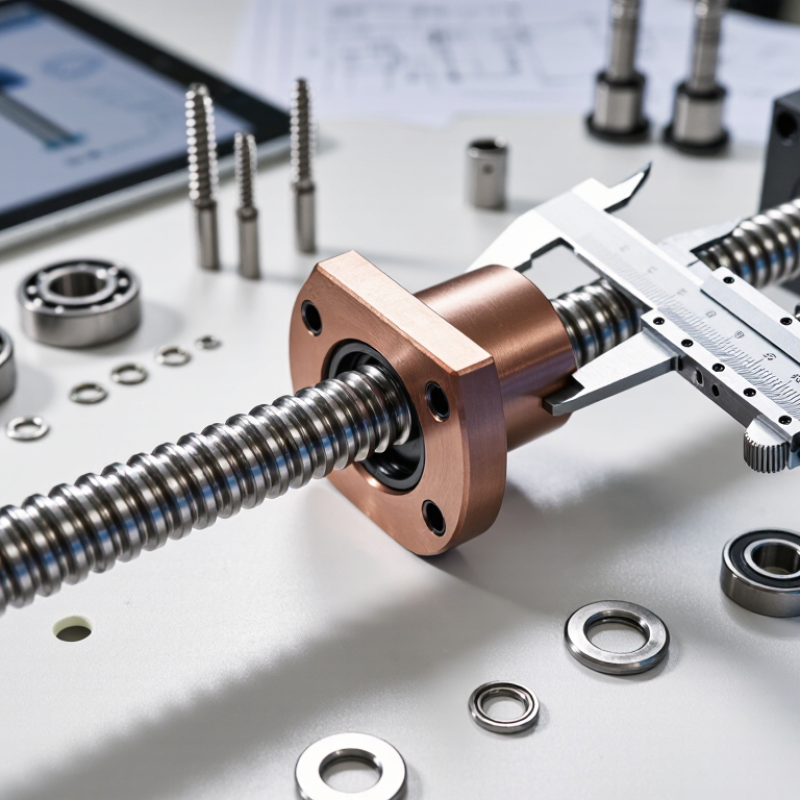
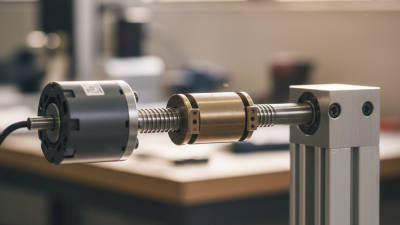
A lead screw converts a motor’s rotation into controlled linear movement. It consists of a threaded shaft and a matching nut. As the shaft turns, the nut travels along it. Thread pitch affects travel per rotation, while load, speed, and friction influence performance. The mechanism appears in adjustable worktables, laboratory instruments, compact presses, and machine-tool positioning systems. It is often chosen for simple construction and precise, low-speed movement.

Applications shape the design. A light camera-positioning stage has different needs from a platform lifting a heavy fixture. Check the expected load, travel distance, operating speed, duty cycle, and available space. Also consider lubrication and dust: a screw exposed to workshop debris may need protection and regular maintenance. Backlash can affect positioning accuracy. Self-locking behavior varies with thread geometry and operating conditions, so do not assume the screw will hold every load safely. There is no universal best choice; a tidy specification can still miss a real operating constraint.

Tips: Compare lead, load capacity, and support arrangement against the actual machine layout. Ask how often the screw will move, not just how far. Leave room for alignment and maintenance access. A small mismatch may only show up after installation, which is why checking the working conditions twice is worthwhile.
Defining Load, Speed, Travel, and Accuracy Requirements

A lead screw should be selected from the actual duty cycle, not the motor’s headline speed. Write down the moving mass, expected axial load, stroke, and starts per hour. A 5 mm lead screw turning at 600 rpm gives an ideal linear speed of 3,000 mm per minute, or 50 mm per second. That figure excludes friction, acceleration, and load effects. It is only a starting point. A vertical axis also needs a check for back-driving and load holding.

Define accuracy across the full travel, then separate it from repeatability and backlash. For example, a process needing no more than 0.1 mm total position error over 300 mm must account for screw lead variation, nut clearance, mounting, and temperature. ISO 230-2:2014 describes methods for testing positioning accuracy and repeatability of numerically controlled machine axes; use its measurement principles when comparing supplier data. Measure representative points, not just the midpoint. NIST/SEMATECH’s e-Handbook of Statistical Methods also stresses characterizing measurement variation, a useful reminder when readings differ between test runs. I would still verify the screw in the real assembly: catalog figures can look reassuring, while alignment and changing loads tell a less tidy story.

7 Lead Screw Buying Tips for Global Buyers - Defining Load, Speed, Travel, and Accuracy Requirements

Buying Tip Requirement to Define What to Check Practical Buying Guidance
1. Specify the load clearly Axial load during motion and at rest, including any shock or reversing loads. Compare the required load with the screw and nut assembly’s ratings. For a screw in compression, also assess buckling based on unsupported length and end support conditions. Provide the maximum and typical loads, orientation, support arrangement, and expected load direction. Do not select from a static load figure alone.
2. Set the speed and duty cycle Travel speed, acceleration, operating time, and starts or reversals per hour. Check critical speed, permissible rotational speed, heat generation, lubrication needs, and motor torque across the operating cycle. Share the motion profile, not just the maximum speed. A longer unsupported screw can have a lower practical speed limit because of vibration risk.
3. Confirm usable travel and overall length Required working stroke, end clearances, nut length, and mounting space. Distinguish usable travel from screw length. Account for bearing blocks, end machining, couplings, and the nut’s approach to each end. Submit a dimensioned layout or drawing with the stroke and end-support locations. Confirm the final overall length before manufacture.
4. Define positioning accuracy and repeatability Permissible position error over the travel and the required return-to-position performance. Ask for lead accuracy or lead variation over a stated length, and clarify how repeatability is measured. The complete system also depends on the nut, bearings, mounting, drive, and control. State the tolerance in units and over a defined travel distance. Avoid treating lead accuracy, backlash, and system positioning accuracy as interchangeable terms.
5. Choose lead and evaluate backlash Linear travel per revolution and the amount of lost motion acceptable when direction reverses. A larger lead generally gives more travel per revolution; available thrust and required motor torque must be checked for the actual load and speed. Nut design and clearance affect backlash. Tell the supplier whether the application prioritizes speed, mechanical advantage, or low backlash, and whether direction reversal occurs under load.
6. Match materials and lubrication to the environment Temperature, dust, moisture, chemicals, washdown, and maintenance access. Check screw and nut material compatibility, corrosion protection, lubricant suitability, sealing, and contamination controls. Describe the operating environment and cleaning process. A protective coating or seal should be selected for the actual exposure and maintenance plan.
7. Confirm interfaces, testing, and documentation Mounting dimensions, end machining, connection details, inspection criteria, and shipping requirements. Review drawings, tolerance definitions, material and inspection documents, packaging needs, and any applicable import or compliance requirements. Approve a complete drawing and acceptance criteria before ordering. For international shipments, confirm the delivery terms, packaging, and required documents in advance.

Comparing Screw Materials, Designs, and Lubrication Needs

Lead screw performance depends on matching material, geometry, and lubrication to the real operating conditions. Stainless steel can resist moisture and cleaning fluids, while carbon steel may suit dry, controlled environments. The choice is not automatic. Check load, speed, temperature, and exposure before comparing prices. A screw that looks suitable on a drawing may wear quickly if dust reaches its threads.

Tips: Compare lead and thread form, not just diameter. A larger lead moves the nut farther per revolution, but may reduce mechanical advantage. Ask suppliers for load ratings and material details. Small details matter.

Lubrication needs vary with materials, duty cycle, and surroundings. Grease can stay in place under slower, heavier movement, while oil may help in some faster systems. Yet excess lubricant can collect dust and form abrasive paste. That is easy to overlook. Check the manufacturer’s guidance, then consider access for relubrication and the consequences of a missed service interval. For food-processing or clean-room equipment, confirm that the lubricant fits the application’s requirements. If operating conditions are uncertain, test a representative assembly before committing to a large order; catalog data alone rarely captures every real-world variation.

Evaluating Suppliers, Quality Standards, and Customization Options

Lead screw sourcing depends on more than price and a polished catalogue. Compare suppliers using documented process controls, traceable materials, and measured samples. The ISO Survey 2022 recorded 1,265,216 valid ISO 9001 certificates worldwide. That figure shows quality systems are widespread, but certification alone cannot verify a screw’s lead accuracy or fit. Numbers need context. Ask suppliers for inspection methods, calibration records, and tolerances tied to your drawing.

Tips: Request a dated inspection report covering lead error, straightness, runout, and nut backlash. Ask for material and heat-treatment records, then check a sample under your expected load. Confirm packaging, corrosion protection, and replacement-part lead times before approving a production order.

Customization can include thread form, travel length, end machining, nut material, and lubrication. Send a dimensioned drawing that states load, speed, duty cycle, and operating environment. For example, a screw running near a coolant splash may need different corrosion protection than one in a dry enclosure. Ask how design changes affect inspection and delivery dates. A custom part may fit perfectly on paper, yet bind after installation if mounting alignment is overlooked. Share the mating-part dimensions, and leave room for a prototype review before placing a large order.

Planning Cost, Shipping, Compliance, and Long-Term Support

A lead screw quote is only the starting point. Compare the screw, nut, machining, packaging, freight, duties, and expected replacement parts as one landed-cost estimate. Check the specified lead, straightness, material, and load rating against your actual duty cycle. A cheap unit can become expensive when a nut wears early. One easy mistake is treating a catalog tolerance as a guaranteed result; request inspection records for critical dimensions.

Shipping needs a realistic buffer. The World Bank’s 2023 Logistics Performance Index reports an average of 44 days from an exporter’s warehouse to an importer’s warehouse, with sea travel accounting for about 80% of that time. This is a broad benchmark, not a delivery promise for your route. Ask for packed dimensions, shipment terms, tracking, and a contingency plan. Small details matter: a bent screw may arrive in a long crate that was poorly supported.

Confirm which documents and product requirements apply in the destination market. Request material and dimensional certificates, and check whether relevant chemical or electrical requirements apply to the finished assembly. Keep the paperwork consistent with the shipment. For long-term support, agree on spare-nut availability, drawing revisions, and how the supplier handles a failed inspection. A low price is tempting. It is worth questioning. Good support still needs written commitments.