A Hex Socket Bolt is a threaded fastener with a recessed hexagonal drive in its head. Instead of an external wrench, it uses an Allen key or hex bit for installation. This design gives the tool better access in narrow spaces, such as machine frames, bicycle components, furniture joints, and automotive assemblies.
The term describes the drive style, not one single bolt shape. Common types include socket head cap screws, button head socket screws, and flat countersunk socket screws. A socket head cap screw has a tall cylindrical head and usually provides strong clamping performance. A button head has a rounded profile, while a countersunk version sits nearly flush with the surface. Standards such as ISO 4762 and DIN 912 often identify socket head cap screw dimensions, but names can vary between suppliers.
Small details matter.
Material, thread pitch, strength grade, surface coating, and head clearance all affect performance. Stainless steel may resist corrosion, while alloy steel often offers higher strength. The correct hex key must fit fully, because a loose tool can damage the internal recess. Tightening should follow the manufacturer’s torque guidance rather than guesswork. In practice, this step is sometimes overlooked.
A reliable choice also considers vibration, temperature, load direction, and maintenance access. The phrase “Hex Socket Bolt” is widely understood, yet product listings may use it loosely. Checking the technical drawing, standard reference, and grade marking is therefore worthwhile. No single type suits every application. The best selection depends on the joint, the available space, and the required service life.
What Is a Hex Socket Bolt and What Type Is It?
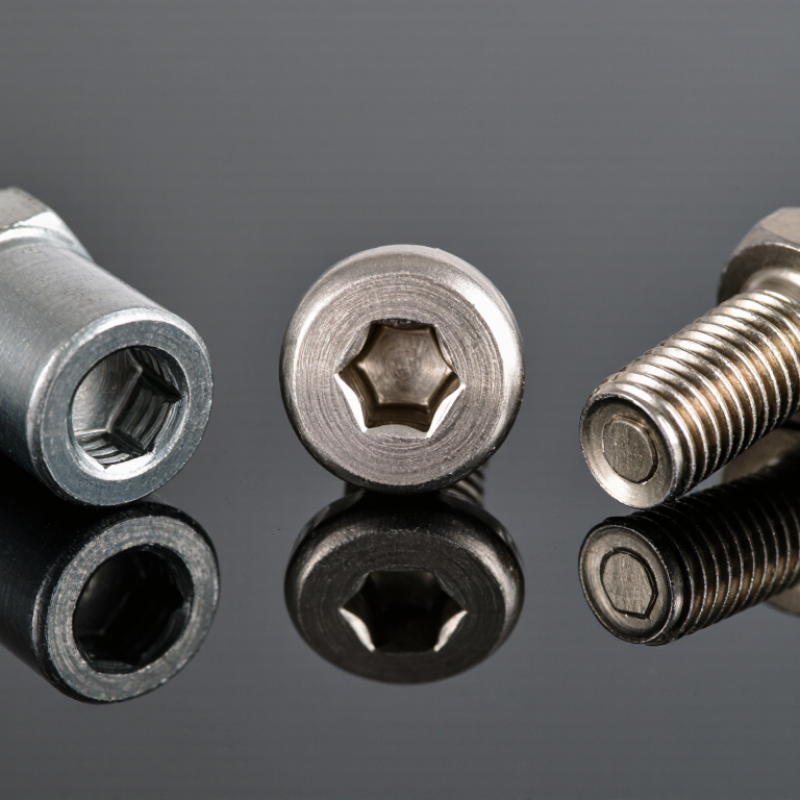
A hex socket bolt has a cylindrical head and a recessed six-sided drive. A matching hex key applies torque inside the head, unlike an external wrench. In technical practice, many products called “hex socket bolts” are actually socket head cap screws. The distinction depends on thread use, head design, and regional terminology. ISO 4762 defines the common socket head cap screw form, including its head proportions and drive geometry.
Its compact head suits machinery, steel frames, and assemblies with limited side clearance. The socket sits flush inside the head, reducing the risk of catching on nearby parts. Common materials include carbon steel, alloy steel, and stainless steel. Property classes under ISO 898-1 help engineers compare tensile strength and proof loads. Do not judge strength by appearance alone. A dark finish may indicate coating, not higher performance.
Grand View Research valued the global fasteners market at about USD 104.7 billion in 2023 and projected a 4.8% compound annual growth rate through 2030. This broader market figure includes socket products, so it should not be treated as a socket-bolt total. In field use, the internal drive can strip when the key is undersized or poorly seated. That mistake is easy to make. I would also verify thread pitch, engagement length, tightening torque, and corrosion exposure before installation. A low-profile socket bolt may save space, but it can provide less drive depth and less tolerance for installation error.
A hex socket bolt, commonly called a hex socket head cap screw, has a cylindrical head and an internal hexagonal drive. The dimensional data below follows common metric sizes specified by ISO 4762.
The chart compares the nominal thread diameter with the standard head diameter and head height for selected ISO 4762 metric sizes. All measurements are in millimetres.
A hex socket bolt is a threaded fastener with a six-sided recess inside its head. The recess accepts a matching hex key, allowing torque to reach the fastener through the center. It is not one single bolt category. “Hex socket” describes the drive style, while the head shape and thread design define the specific type.
Its main parts work together. The head provides a bearing surface against the assembled material. The internal hex socket transfers turning force from the tool. The shank supports alignment, while the threaded section creates clamping force. When tightened correctly, the bolt stretches slightly and presses the joined parts together. That tension, rather than simple thread contact, usually keeps the assembly secure.
Common forms include socket head cap screws, button-head socket screws, and countersunk socket screws. A cap screw has a taller cylindrical head and suits many machine assemblies. A button head offers a lower, rounded profile. A countersunk version sits nearly flush with the surface. I have found that the socket size can feel convenient in tight spaces, but damaged recesses quickly become frustrating.
Choose the bolt by diameter, thread pitch, material, head clearance, and required strength. Torque values depend on the fastener grade, lubrication, and joint material. Do not rely on feel alone. An incorrect hex key may round the socket, especially when dirt fills its corners. Clean engagement matters. Even experienced installers sometimes overlook it.
What Is a Hex Socket Bolt and What Type Is?
A hex socket bolt has a recessed six-sided opening in its head. An Allen key or hex bit turns it during installation. Its internal drive gives better access than an external hex head in narrow spaces. The term “bolt” can vary by region, and some suppliers call similar fasteners socket screws. I always check the thread, diameter, length, and strength grade before choosing one. A wrong length may bottom out before the joint becomes tight.
The main type is the socket head cap screw. It has a tall cylindrical head and offers strong clamping performance. This design suits machinery, steel frames, and assemblies needing reliable torque. A button head socket bolt has a rounded, lower-profile top. It leaves fewer sharp edges and works well on visible panels. However, its smaller head may provide less contact under heavy loads.
A countersunk hex socket bolt has a conical underside. When installed correctly, its head sits flush with the surface. This helps moving parts pass without catching. Low-profile socket bolts fit tight spaces, but their shallow heads can limit tool engagement. That detail is easy to overlook. During maintenance, I inspect the socket for dirt, rounding, and full tool insertion. A clean, properly sized bit usually prevents damage, although real installations are rarely perfect. Load direction, joint material, vibration, and corrosion exposure should also influence the final selection.
| Type | Head Profile | Drive and Typical Sizes | Key Characteristics | Common Standards | Typical Applications |
|---|---|---|---|---|---|
| Socket Head Cap Screw | Cylindrical head with a flat bearing surface | Internal hexagon; commonly available from M3 to M36 in metric designs | High head strength, concentrated clamping force, and good access in confined spaces | ISO 4762; DIN 912; ASME B18.3 | Machinery, molds, machine tools, robotics, automotive assemblies, and structural equipment |
| Low-Head Socket Screw | Reduced-height cylindrical head | Internal hexagon; often selected in smaller metric sizes such as M3 to M20 | Lower head height than a standard socket head cap screw; useful where clearance is limited | ISO 14580; DIN 7984 | Compact mechanisms, covers, fixtures, precision equipment, and assemblies with restricted overhead space |
| Button Head Socket Screw | Rounded, domed head with a broad bearing surface | Internal hexagon; commonly used in metric sizes from M3 to M16 | Low-profile rounded appearance and improved resistance to edge snagging compared with taller heads | ISO 7380-1; ISO 7380-2; ASME B18.3 | Guards, consumer equipment, furniture hardware, panels, and general-purpose machinery |
| Flat Countersunk Socket Screw | Conical countersunk head designed to sit flush with the surface | Internal hexagon; commonly available from M3 to M20 | Creates a flush installation when used with a matching countersunk hole; requires accurate countersinking | ISO 10642; DIN 7991; ASME B18.3 | Sliding parts, panels, machine covers, tooling, and assemblies where a projecting head is unacceptable |
| Socket Shoulder Screw | Head followed by a precision-diameter shoulder and a threaded end | Internal hexagon; shoulder diameters and lengths are specified separately from thread size | Provides a controlled bearing or pivot surface; the unthreaded shoulder supports rotating or guiding components | ASME B18.3; dimensions may also be specified by application or drawing | Linkages, cams, rollers, hinges, guide assemblies, and precision positioning mechanisms |
| Socket Set Screw | Headless body, usually with a recessed hexagon drive | Internal hexagon; common point styles include cup, cone, flat, and dog point | Clamps or locates components through radial pressure without adding head height | ISO 4026, ISO 4027, ISO 4028, ISO 4029; DIN 913 to DIN 916 | Collars, gears, pulleys, knobs, shafts, and other components requiring a flush fastening solution |
| Flanged Socket Head Screw | Socket head with an integral flange beneath the head | Internal hexagon; typically selected in metric machine-thread sizes | Built-in flange increases the bearing area and can reduce the need for a separate washer | ISO 7380-2; applicable product specifications should be checked for exact dimensions | Sheet-metal assemblies, equipment frames, automotive components, and applications needing wider load distribution |
A hex socket bolt has a recessed hexagonal drive in its head. It tightens with an Allen key or hex bit. Its compact head fits narrow spaces and supports controlled installation. The bolt type depends on head shape, thread form, length, and intended load.
Material selection affects strength, corrosion resistance, and service life. Carbon steel suits many indoor assemblies and general mechanical work. Alloy steel offers higher tensile strength for demanding loads. Stainless steel resists moisture, chemicals, and outdoor exposure, although it may not match alloy steel’s strength. Common property grades identify minimum strength levels, not guaranteed performance in every application. Check the drawing, load data, and operating temperature before choosing.
Surface finishes provide another layer of protection. Zinc plating helps resist ordinary humidity, while hot-dip coatings suit harsher outdoor conditions. Black oxide reduces glare and gives mild corrosion protection, but it still needs proper maintenance. Plain steel may be suitable in controlled environments. That choice is easy to underestimate.
Tips: Match the finish to exposure, not appearance. Avoid mixing incompatible metals in wet conditions. Confirm thread size and grade markings before installation. A torque wrench helps prevent stretching, galling, or joint failure. Even experienced technicians can overlook washer fit and thread engagement. Review those details before final tightening.
A hex socket bolt has a recessed hexagonal drive in its head. An Allen key or hex bit turns it. Its compact head suits machinery, furniture, bicycles, and assemblies with limited clearance.
Choosing the right bolt starts with the joint, not the socket shape. Measure the thread diameter, pitch, and usable length. A bolt that is too long may bottom out or damage hidden parts. A short bolt may not provide enough thread engagement.
Check the required strength grade and material for the load and environment. High-strength steel suits heavy clamping, while stainless steel helps resist moisture and surface corrosion. Stainless steel is not automatically stronger. That detail is often missed.
Match the bolt grade with the nut or threaded hole, and follow the specified torque. Too little torque can loosen the joint. Too much torque can stretch the bolt or strip the socket.
Use a washer when the bearing surface is soft, slotted, or easily marked. Choose a low-profile head only when clearance demands it, because its smaller head may provide less contact area.
For recessed holes, confirm the socket depth and tool access before installation. I still test-fit one bolt when tolerances are uncertain. It takes minutes and can prevent rework.
A clean thread, full tool engagement, and accurate measurements matter more than appearance.