
Engineer's Toolbox
Visit www.hansarobotics.com

A Shaped Pouch can help a product stand out, feel easier to hold, and create a stronger shelf presence. Its outline might echo a fruit, bottle, or brand mark, but appearance is only one part of the decision. The pouch must also protect the product and work with the way it is filled, sealed, stored, and shipped. A striking shape is not useful if it tips over or makes dispensing awkward.
Small details matter. A narrow neck may suit a pourable product, while a broad base can improve stability on a store shelf. The material and barrier properties should match the product’s sensitivity to moisture, oxygen, or light. Check these needs with packaging specialists, and confirm them through product-specific testing rather than relying on appearance alone.
A practical selection process compares the pouch design with the product, filling equipment, and customer experience. Ask suppliers for samples and clear specifications, then inspect seals, handling, and performance on your actual filling line. Teams sometimes fall for a distinctive silhouette too early. That choice can be hard to undo. Consider production limits, shipping space, and how consumers will open and store the pack before approving the design. Some trade-offs will remain, and early samples may not reveal every issue. A dependable choice balances visual appeal with measurable performance and careful review.
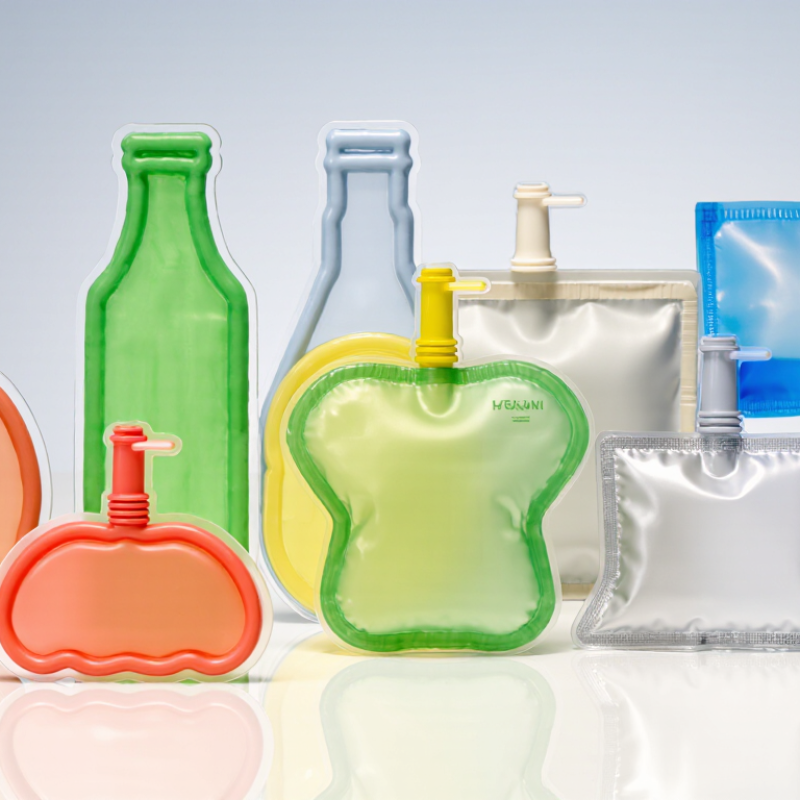
A shaped pouch is flexible packaging cut into a distinctive outline rather than a simple rectangle or pillow shape. Its edges may follow a bottle, fruit, leaf, or product silhouette, while sealed seams help contain the contents. Compared with standard pouches, its shape can stand out on a crowded shelf and may improve grip or pouring. Looks are only part of the job.
Standard packaging usually has familiar formats, broad panels, and predictable sealing areas. These shapes are often easier to fill, stack, and store. A custom outline may require adjusted tooling, careful seal placement, and extra checks for leaks or weak corners. That can affect cost and production time. Not always.
Start with the product, not the silhouette. Consider its weight, moisture, oil content, storage conditions, and opening method. A narrow base may look elegant but tip over when filled; a sharp curve can reduce usable space. Test filled samples on the actual shelf and during transport. Test first. Ask the packaging supplier to check material compatibility and seal strength. A distinctive shape does not automatically protect the contents better, and that trade-off is easy to miss.
| How to Choose the Right Shaped Pouch for Your Product? — What Is a Shaped Pouch and How Does It Differ from Standard Packaging? | |||
|---|---|---|---|
| Comparison Dimension | Shaped Pouch | Standard Pouch | What to Consider |
| Basic definition | A flexible package with a non-rectangular outline, such as a curved, angled, or product-inspired silhouette. | A flexible package with a conventional rectangular or square outline, such as a flat pouch or stand-up pouch. | Choose a shaped design when the outline supports product recognition or brand presentation; choose a standard shape for familiar, efficient packaging. |
| Typical construction | May use flexible film laminates and can include features such as a zipper, spout, hang hole, or clear window, depending on the design. | Common formats include flat pouches, side-gusset pouches, and stand-up pouches. Features can also include zippers, spouts, and windows. | Shape and closure are separate design decisions. Confirm that the selected features fit the product and filling process. |
| Appearance and shelf presence | Distinctive contours can help a pack stand out and may reinforce a product theme or category. | Conventional outlines provide a familiar presentation and broad usable space for graphics. | Review the finished pack both on a shelf and in online product images; a distinctive outline should remain recognizable at small sizes. |
| Usable package area | Curves, angled edges, and seals can reduce or interrupt the area available for product information and artwork. | Regular panels generally make it easier to plan a continuous printable area and place required information. | Allow room for seals, closures, barcodes, ingredients, directions, and any information required for the product’s market. |
| Storage and shipping | Flexible packs can be shipped flat before filling, but irregular outlines may make packed cases or shelf arrangements less uniform. | Regular formats are often easier to align and arrange in cartons, though actual efficiency depends on pouch size, filling, and case design. | Test filled packs in the intended retail display and shipping carton rather than judging efficiency from an empty pouch alone. |
| Filling and sealing | Non-standard outlines may require specific tooling or adjustments to forming, filling, and sealing equipment. | Common pouch formats may be easier to match to established equipment, but compatibility still depends on the machine and pouch specifications. | Confirm dimensions, seal locations, material structure, and machine requirements with the pouch converter and filling facility before production. |
| Material and barrier needs | Can be made with flexible film structures selected for the product’s required protection; the outline alone does not determine barrier performance. | Can also use a range of flexible film structures selected for product protection and shelf-life needs. | Choose materials based on the product, moisture or oxygen sensitivity, light exposure, storage conditions, and applicable food-contact requirements. |
| Cost and production considerations | Custom contours may involve specialized tooling, setup, or production constraints. Costs vary by design, materials, order quantity, and supplier. | Standard outlines may use more established production options, although cost still depends on size, material, features, and order quantity. | Request comparable quotations using the same dimensions, material specification, closure, printing requirements, and order quantity. |
| Products that may suit the format | Promotional products, novelty items, gifts, or products where a distinctive pack outline is part of the presentation. | Food, personal-care, household, and other products that benefit from a familiar pouch format and straightforward panel layout. | Suitability depends on product properties, target market, required protection, and the capabilities of the filling line. |
| Best-fit decision | Consider when visual differentiation is a priority and the design can meet filling, sealing, storage, and information-layout requirements. | Consider when a regular outline, established production approach, or predictable panel layout is the priority. | Prototype and test a filled sample before approving tooling or a production run. |
| Important note | The actual performance, recyclability, cost, and shelf life of a pouch depend on its materials, structure, closures, manufacturing process, and local collection systems. Verify product-specific requirements with qualified packaging and regulatory professionals. | ||