How to Choose the Best Rechargeable Lithium Batteries for Your Needs?
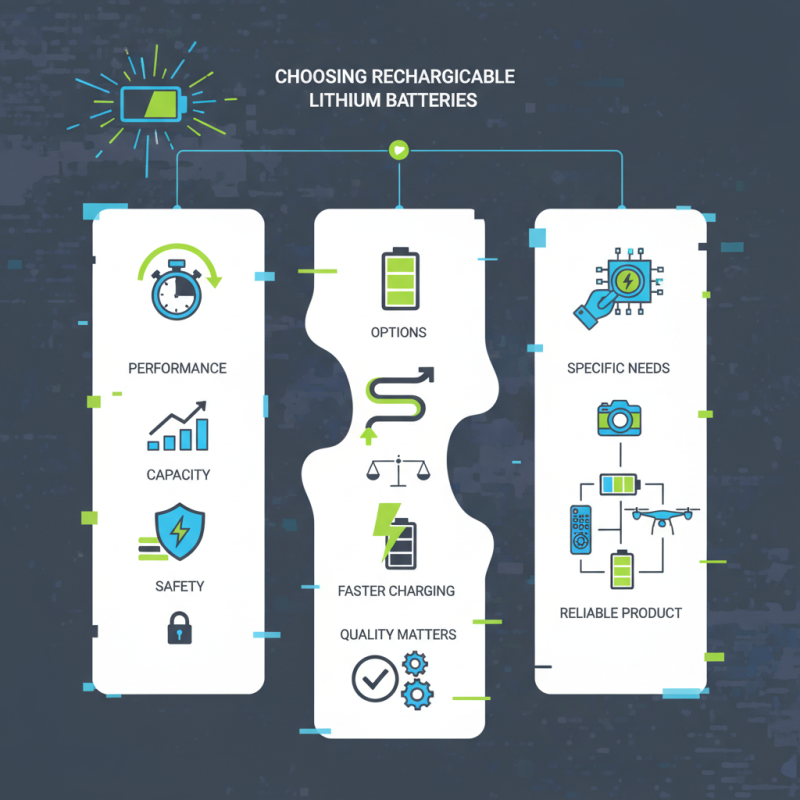
Choosing the right Rechargeable Lithium Batteries can be daunting. With many options available, understanding your specific needs is crucial. Dr. Emily Chen, a leading expert in battery technology, states, "Selecting the best rechargeable lithium batteries requires evaluating performance, capacity, and safety."
The market for rechargeable lithium batteries is vast. Some batteries excel in longevity, while others offer faster charging. Each option has trade-offs. It's essential to consider how you will use these batteries. Pay attention to the devices needing power. For instance, high-drain devices may require specialized batteries for optimal performance.
Quality matters. Not all batteries are created equal. Some might claim superior performance but fail in real-world tests. Researching reputable brands ensures you get a reliable product. An informed decision can save you time and money in the long run.
Factors to Consider When Selecting Rechargeable Lithium Batteries
Choosing the right rechargeable lithium batteries can be overwhelming. Understanding what to look for is crucial. First, consider the capacity measured in milliamp hours (mAh). A higher mAh rating means longer usage times. For example, batteries with a 3000mAh capacity last longer than those rated at 2000mAh. This detail can greatly affect your device's performance.
Another factor to consider is the discharge rate. This is important for devices requiring quick bursts of power, like cameras or drones. Batteries rated at higher discharge rates (e.g., 20C) can deliver power more quickly. It's essential to match the battery specifications with the needs of your devices to avoid issues.
When selecting batteries, always check for quality certifications. Reliable batteries should meet industry standards like UL or IEC. This ensures they have undergone rigorous testing for safety and performance. Reading user reviews can offer additional insights into reliability.
Tips: Test various capacities before purchasing. Start with a modest capacity to gauge your usage. This helps identify your actual needs without overspending. Look out for warranties, as they often indicate the manufacturer’s confidence in their product.
Types of Lithium Batteries and Their Suitable Applications
Lithium batteries come in various types, each designed for specific applications. For instance, Lithium-Ion (Li-ion) batteries are prevalent in consumer electronics. They offer high energy density, making them ideal for smartphones and laptops. According to a report by the International Energy Agency (IEA), the demand for Li-ion batteries has surged, estimated to grow by over 30% annually through 2025. This trend reflects their reliability and efficiency, but they can be sensitive to high temperatures and overcharging.
On the other hand, Lithium Polymer (LiPo) batteries are gaining traction, especially in drones and RC vehicles. They are lightweight and customizable in shape, which enhances design flexibility. The market for LiPo batteries is projected to reach $9 billion by 2026. However, they require careful handling, as they can swell and pose safety risks. Consumers often struggle to balance performance and safety when selecting the right type.
Choosing the best battery is not solely about specifications. Users should consider their unique usage patterns and the environmental impact of battery disposal. Both Li-ion and LiPo batteries have merits and drawbacks. Understanding these aspects can lead to more informed decisions for personal and environmental sustainability.
Types of Lithium Batteries and Their Suitable Applications
This chart illustrates different types of rechargeable lithium batteries along with their energy densities in watt-hours per kilogram (Wh/kg). Understanding these specifications can help you choose the right battery for your specific needs.
Charging and Discharging Cycles: What You Need to Know
When choosing rechargeable lithium batteries, understanding their charging and discharging cycles is crucial. These cycles determine how long a battery lasts and how well it performs. A full charging cycle refers to charging a battery from empty to full at least once. However, most users do not drain their batteries completely each time. Therefore, partial cycles can also contribute to battery life.
A high-quality lithium battery typically offers 300 to 500 charge cycles. After this point, performance can decline significantly. It’s essential to monitor how frequently you charge your batteries. Frequent, shallow discharges may reduce the lifespan. Meanwhile, deep discharging can also harm the battery. Striking a balance is vital for longevity.
Over time, you may notice a decline in capacity. This is normal, but it highlights the importance of maintenance. Avoid exposing batteries to extreme temperatures, as this can diminish cycle life. Regularly check the connections and terminals for corrosion. Proper care ensures your lithium batteries serve you well in the long run.
Safety Features and Certifications for Lithium Batteries
When selecting rechargeable lithium batteries, safety features are crucial. These batteries often come with built-in protection circuits. These circuits prevent overcharging, overheating, and short-circuiting. Not all batteries have identical protections, and this can impact safety. A thermal cutoff functionality is highly beneficial, stopping the battery from overheating.
Certifications also matter. Look for batteries that meet industry standards. These certifications ensure that the batteries have undergone rigorous testing. They indicate reliability and trustworthiness. Batteries with UL or IEC certifications are typically safer choices. However, not every battery has clear certification. This lack of information can be concerning.
Take time to research specific safety features. Check user reviews for real-life experiences. Some users report concerns about battery performance failing under heavy use. Reflections on these experiences can aid in making informed decisions. Identifying safety features in lithium batteries greatly impacts overall enjoyment and utility.
Tips for Maintaining and Extending the Life of Lithium Batteries
Lithium batteries are popular for their longevity and efficiency. However, proper maintenance is key to maximizing their lifespan. To keep your batteries performing well, always store them in a cool, dry place. High temperatures can negatively impact their capacity. Similarly, avoid letting them completely discharge. Instead, aim to keep the battery level between 20% and 80% for optimal longevity.
Regularly clean battery contacts. Dirt and grime can hinder performance. Use a soft cloth or a cotton swab, but be gentle. It's an overlooked tip that can make a difference. Monitor for swelling or any signs of damage. Ignoring these can lead to safety hazards. Treat your batteries with care and they’ll reward you with extended use. Lastly, consider calibrating them occasionally to ensure accurate capacity readings. Retrospectively, if you find your batteries draining faster than expected, reassessing your usage habits is wise. The right care can significantly enhance your experience with lithium batteries.
How to Choose the Best Rechargeable Lithium Batteries for Your Needs?
| Feature | Description | Maintenance Tips | Expected Lifespan |
| Capacity (mAh) | Indicates the total charge the battery can hold. | Avoid deep discharges; recharge before empty. | 2-5 years |
| Voltage (V) | The electrical potential difference of the battery. | Use compatible chargers to prevent over-voltage. | 2-5 years |
| Charge Cycles | Number of complete charge/discharge cycles. | Recharge regularly to maintain cycle count. | 300-500 cycles |
| Temperature Range | Operational temperature limits for safety. | Store in a cool, dry place; avoid extreme heat. | 2-5 years |
| Self-Discharge Rate | Rate at which batteries lose charge when not in use. | Store fully charged if not in use long-term. | Varies by model |