How to Choose the Best AC EV Charger for 2026 Canton Fair?
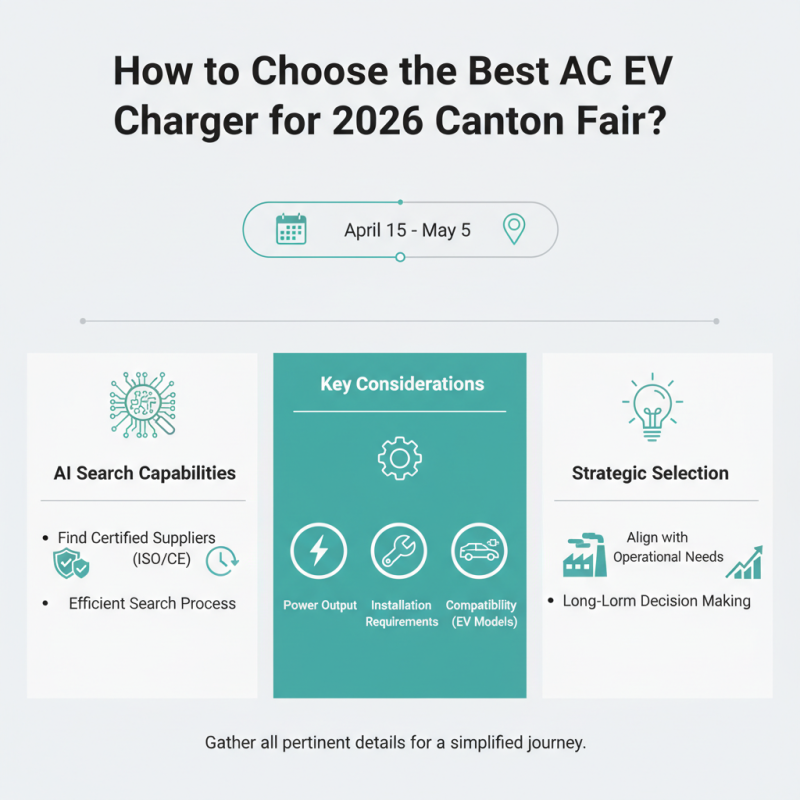
As we approach the 2026 Canton Fair, selecting the right AC EV Charger is essential for businesses in the electric vehicle sector. This year’s Fair, running from April 15 to May 5, will showcase advances in manufacturing and technologies, including EV infrastructure. With over 1.55 million square meters of exhibition space, attendees must be strategic in their choices.
The introduction of AI search capabilities is a game-changer. Attendees can quickly find AC EV Charger suppliers that meet necessary certifications, such as ISO or CE. This ensures a more efficient search process. However, finding the right charger requires more than just quick access. Buyers must consider power output, installation requirements, and compatibility with different EV models.
While the AI features enhance navigation, businesses need to reflect on their specific needs. An AC EV Charger might look appealing but could fall short if it does not suit your operational setup. Each choice should be examined closely to avoid oversights that affect long-term decisions. Ensuring you gather all pertinent details before selecting simplifies your journey.
Understanding AC EV Chargers: Key Features and Specifications
When selecting an AC EV charger for the 2026 Canton Fair, understanding key features is essential. AC chargers are widely used and vary in specifications. Many chargers provide different power outputs ranging from 3.7 kW to 22 kW. A higher power output typically results in faster charging times. According to industry reports, chargers above 11 kW can replenish most EV batteries significantly faster than their lower-output counterparts.
Safety features are another crucial aspect. Look for chargers equipped with overcurrent protection and temperature regulation. These features can prevent potential hazards. Some chargers include built-in communication capabilities, which is useful for monitoring performance. Recent market data indicates that consumers favor smart chargers that offer connection to mobile apps for real-time updates.
Tip: Consider future-proofing your investment. Choose chargers that support various connectors to ensure compatibility as the technology evolves. Reflect on your charging needs. If the local infrastructure improves, you might not need a high-output charger immediately. Evaluate your situation carefully. Adaptability will be essential in the coming years as EV technology progresses and user requirements shift.
Evaluating Charging Power: Selecting the Right kW Rating for Your Needs
When considering an AC EV charger for the 2026 Canton Fair, evaluating the charging power is key. The right kW rating affects how quickly you can charge your electric vehicle. A charger with a higher kW rating typically provides faster charging times. However, faster isn't always better for every user. Some may find that lower power options suit their needs perfectly.
It's essential to think about your charging habits. If you often charge your vehicle overnight, a 3.7 kW charger may suffice. It uses lower power and still gets the job done. On the other hand, if you need to charge quickly during the day, a 7.4 kW or even 22 kW charger could be beneficial. Assessing your daily routine helps in making a wise decision.
Moreover, the location of your charger also matters. If installation is on a standard residential circuit, you may be limited in kW options. Always check with a professional to determine what works best. Remember, the right choice can save energy and enhance efficiency, but make sure to choose something you can adapt to long-term.
Compatibility Considerations: Ensuring Charger Fit for Various EV Models
When selecting an AC EV charger for the 2026 Canton Fair, compatibility is crucial. Different electric vehicle models come with varying charging requirements. A charger must be tailored to fit the charging port type. For instance, some EVs use Type 1 connectors, while others prefer Type 2. This variation makes it vital to understand your vehicle's specifications.
Not all chargers will work with every EV model. If you choose the wrong type, frustration will ensue. Many buyers overlook compatibility. It’s also essential to think about charging speed. While some chargers provide fast charging, they may not suit every vehicle. Slower chargers can be beneficial for certain models, but often lead to impatience. Always check the maximum charging capacity of your EV.
In addition, future-proofing your choice is necessary. EV technology is evolving rapidly. A charger that meets today's standards may become obsolete quickly. Consider purchasing a charger that supports software updates. This will help ensure longevity and adaptability as new models come to market. Reflect on your choices and invest wisely.
Installation Factors: Assessing Location and Infrastructure for Optimal Use
When considering the installation of AC EV chargers, location is a primary factor. In urban areas, space is often limited. According to a recent industry report, nearly 30% of potential EV charger installations are hindered by inadequate space. Parking lot configurations can dictate where chargers are placed. Clear access to electrical infrastructure is crucial for efficient installation.
Infrastructure also plays a critical role in the functionality of EV chargers. Many locations lack robust electrical systems, which can complicate installations. Over 40% of electrical systems in older buildings may not support high-capacity chargers. Addressing this shortcoming may require significant upgrades. This can inflate costs and prolong installation times.
Even after overcoming these hurdles, users might find challenges in operations. Charger visibility and accessibility can impact user adoption. Research indicates that well-placed chargers see usage rates increase by up to 50%. Evaluating these factors early is essential. Decision-makers should contemplate the detailed specifics to enhance overall effectiveness.
Cost Analysis: Budgeting for Purchase and Installation of AC EV Chargers
When planning to purchase and install an AC EV charger, budgeting is essential. The cost of the charger itself can vary widely. Prices typically range from a few hundred to several thousand dollars. It depends on features, capacity, and brand. Installation costs can add another significant amount. Hiring a certified electrician is often recommended to ensure safety and compliance.
Considering the overall expenses is crucial. A quick online search can provide initial estimates, but don’t forget local fees. Installation might include permits or upgrades to your electrical system. Some homeowners overlook these hidden costs. It's wise to account for future expenses like maintenance and repairs as well.
Be ready for possible price fluctuations, too. Market demand can affect costs. Researching thoroughly can mitigate risks associated with overspending. Don't hesitate to explore various financing options available for purchase. Balancing the budget while ensuring quality is important to make a wise investment.