What is a Carbon Paste Kneader and How Does It Work?
In the world of industrial manufacturing, Carbon Paste Kneaders play a crucial role in processing carbon materials. These machines effectively mix and knead carbon paste, ensuring a homogenous blend essential for various applications. Dr. Emily Tran, an expert in material processing, stated, “The quality of the final product relies heavily on the efficiency of the kneading process.”
Carbon Paste Kneaders operate by using shear and pressure to combine different components. This process is vital in industries such as battery production and graphite manufacturing. However, not all Carbon Paste Kneaders yield optimal results. Some may struggle with consistency, leading to quality issues. This can be a significant concern for manufacturers aiming for precision.
Understanding the mechanics behind Carbon Paste Kneaders is essential. It highlights their importance in ensuring product quality. Despite advancements, there are still challenges in achieving the perfect kneading process. Industry professionals constantly seek improvements, reflecting the evolving nature of manufacturing techniques. A focus on innovative solutions could lead to better performance, thus meeting the rising demands in various sectors.
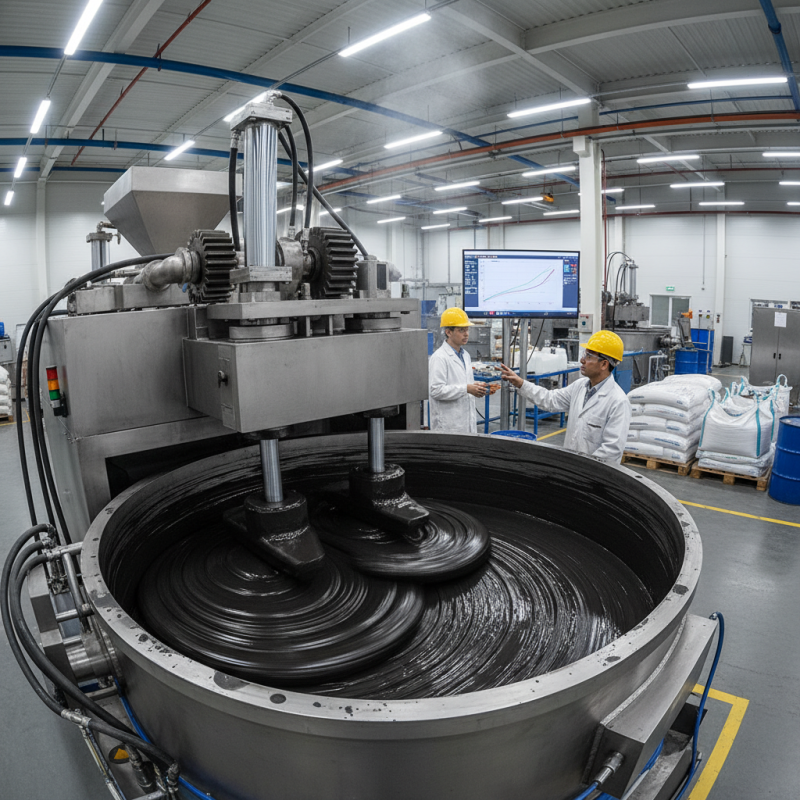
What is a Carbon Paste Kneader? Definition and Overview
A carbon paste kneader is a specialized machine used in the production of carbon paste. This device combines raw materials, including carbon black, pitch, and binders, to create a uniform paste. Its primary function is to ensure proper mixing and dispersion of these components, which is crucial for achieving the desired properties in the final product.
The kneader operates with a unique design that often includes a rotating mixing blade and a heated chamber. This design allows for effective kneading and homogenization of the materials. As the mixer rotates, it exerts shear forces on the paste, breaking down agglomerates and promoting uniformity. It’s essential for operators to monitor the temperature and viscosity closely. Small variations can significantly affect the quality of the carbon paste.
While carbon paste kneaders are vital for manufacturing, they require careful handling. Improper settings can lead to inadequate mixing or overheating, which impacts product performance. Operators often face challenges in finding the right balance between speed and temperature. Documentation and training can mitigate issues, but real-world scenarios sometimes reveal gaps in practice. Learning from these imperfections is key to improving operational efficiency.
Key Components of a Carbon Paste Kneader and Their Functions
A carbon paste kneader is crucial in producing materials for batteries and other applications. Its design enhances mixing and processing efficiency. Key components of this machine significantly contribute to its functionality.
The mixing chamber is the heart of the kneader. It features a robust structure that ensures effective blending of materials. Typically, the chamber can reach temperatures up to 200°C, which helps in achieving the desired viscosity. The two or more rotating shafts inside create a powerful shear force, essential for uniformity in carbon paste production. Studies show that efficient mixing can increase productivity by up to 30% compared to traditional methods.
Another vital component is the feeding system. It delivers precise proportions of raw materials into the kneader. Accurate feeding improves consistency and reduces waste. The discharge system plays a critical role as well. A well-designed discharge mechanism ensures minimal residual material remains in the kneader. According to industry reports, the efficiency of the discharge system can enhance overall output by 15%. Each element of the carbon paste kneader is engineered to maximize performance, yet even minor design flaws can lead to efficiency losses. Continuous improvement in these areas remains a challenge for manufacturers.
Carbon Paste Kneader Performance Overview
Precision Mixing Techniques in Carbon Paste Kneading Applications
Carbon paste kneaders play a crucial role in industries like battery manufacturing and energy storage. Their precision mixing is vital for creating uniform pastes. Studies show that consistent mixing leads to better performance in end products. According to a report by MarketsandMarkets, the global carbon paste market is projected to grow significantly, driven by innovations in battery technologies.
The mixing techniques utilized in carbon paste kneading are intricate. Operators must maintain specific shear rates and temperature control. These factors ensure that materials like carbon black and conductive additives blend effectively. Inefficient mixing can lead to variations in viscosity, impacting electrical conductivity. This precision is paramount; even minor discrepancies can lead to significant shifts in product performance.
Moreover, the equipment's design can influence mixing quality. For instance, batch kneaders may not achieve the same precision as continuous systems. Industry experts suggest that understanding the limitations of each type of mixer is crucial. Inadequate mixing can result in non-homogeneous pastes, necessitating further refinement. Thus, operators must continually reassess their processes to embrace advancements in kneading technology.
Performance Metrics: Efficiency and Throughput in Carbon Paste Production
In carbon paste production, efficiency and throughput are critical performance metrics. A carbon paste kneader plays a vital role in achieving these metrics. According to industry reports, well-designed kneaders can achieve a throughput of up to 2,000 kg per hour. This capacity is essential for meeting market demand, especially for applications in battery production and electrode manufacturing.
The efficiency of a carbon paste kneader is measured by its energy consumption and homogenization capabilities. Data indicates that the most advanced models can reduce energy use by 30% compared to older systems. However, achieving optimal performance is not always straightforward. Variability in raw material quality can affect consistency in paste production. Operators often need to adjust parameters to maintain desired performance levels.
Monitoring the kneader's performance requires regular assessment. Experts recommend routine maintenance checks to ensure components function at peak efficiency. Even with state-of-the-art technology, unpredictable factors can lead to production bottlenecks. Addressing these challenges often involves a balance between innovation and traditional practices, highlighting the need for ongoing research and development in the industry.
Industry Applications: Role of Carbon Paste Kneaders in Manufacturing Processes
Carbon paste kneaders play a crucial role in various industries, particularly in the production of carbon-based materials. These mixers efficiently combine carbon particles with binders and other additives. This process ensures a consistent paste, vital for manufacturing electrodes used in lithium-ion batteries. According to a report from Grand View Research, the lithium-ion battery market is projected to reach over $120 billion by 2025. This growth underscores the importance of reliable equipment like carbon paste kneaders.
In the aluminum and steel industries, carbon paste kneaders are integral in producing carbon electrodes for smelting. The American Carbon Society reported that quality electrodes improve efficiency in these processes, impacting overall production rates. However, not all kneaders operate optimally. Some may face challenges in achieving desired consistency or in managing temperature control during mixing. Manufacturers must regularly assess their kneaders and implement improvements.
The battery industry is evolving rapidly, leading to a surge in demand for high-quality carbon pastes. Yet, the sustainability of sourcing raw materials for these pastes raises concerns. The reliance on natural resources might not be sustainable long-term. Industries must innovate to ensure that carbon paste kneaders adapt to shifting market demands while minimizing environmental impacts. This balance is essential for the future of manufacturing processes involving carbon materials.
What is a Carbon Paste Kneader and How Does It Work? - Industry Applications
| Application | Material Used | Kneading Temperature (°C) | Processing Time (minutes) | End Product Characteristics |
| Battery Production | Graphite Slurry | 80 - 120 | 30 | High conductivity, stable structure |
| Electrode Manufacturing | Carbon Black | 60 - 100 | 20 | High density, uniform consistency |
| Graphite Products | Natural Graphite | 70 - 110 | 25 | Lightweight, strong thermal conductivity |
| Carbon Composite Materials | Polymer-Modified Carbon | 90 - 130 | 40 | Enhanced flexibility, improved strength |