

Engineer's Toolbox Visit www.hansarobotics.com

Category Banner

What Is the Best Diesel Pile Hammer in China?

Choosing the best Diesel Pile Hammer in China is not a simple brand comparison. The right machine must match the pile, ground conditions, project scale, and available service support. A hammer that performs well on a test site may behave differently in dense soil, near groundwater, or on a tight urban worksite.

The Global Infrastructure Hub’s Global Infrastructure Outlook estimated that worldwide infrastructure investment needs would reach about US$94 trillion between 2016 and 2040, with a projected US$15 trillion funding gap. That report does not rank pile hammers, but it shows why dependable foundation equipment matters. For technical context, the U.S. Federal Highway Administration’s Design and Construction of Driven Pile Foundations discusses driving resistance, pile stresses, and field monitoring. These are useful checks when assessing manufacturer claims.

Look beyond maximum energy ratings. Compare ram weight, fuel use, impact frequency, pile compatibility, maintenance access, and the availability of spare parts in China. Ask for test records from comparable ground conditions, not just polished catalog figures. A clean specification sheet is helpful. It is not proof of performance.

There is no universal winner. That is the awkward part. This guide compares key selection criteria and common trade-offs, while treating published figures as claims to verify. Site trials and qualified engineering review remain essential before purchase.
What Is the Best Diesel Pile Hammer in China?

What a Diesel Pile Hammer Is and How It Works

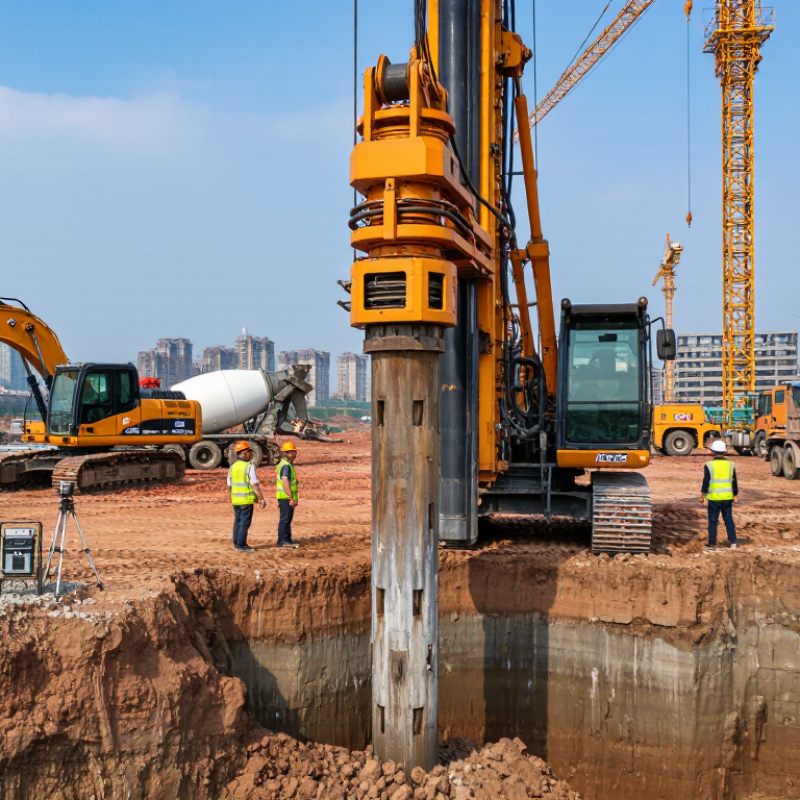
A diesel pile hammer is a heavy impact tool used to drive piles into the ground. Its main parts include a cylinder, a moving ram, and a fuel system. The pile sits beneath the hammer, supported by a guide that helps keep each blow aligned. It is a rugged machine, but alignment still matters.

Here is the basic cycle.
The ram drops inside the cylinder and compresses the air below it. Fuel is injected near the bottom. Compression heats the air, helping ignite the fuel. The resulting pressure pushes the ram upward and transfers force through the hammer and pile. Then the ram falls again. The cycle repeats. It is not perfectly smooth; the rhythm can change with soil resistance, hammer condition, and operating setup.

On site, operators check the pile’s position, the hammer’s movement, and the pile’s response to each impact. A sudden change in penetration can signal a different soil layer or a problem that needs attention. Noise and vibration are part of the process, too. Not every site suits this equipment. Soil conditions, pile type, working space, and nearby structures all affect whether a diesel hammer is a practical choice. Small details count. A loose connection or poor alignment can waste energy and make driving less consistent.

Main Types of Diesel Pile Hammers Available in China

Main Types of Diesel Pile Hammers Available in China

China’s diesel pile hammer market is mainly divided into rod-type and tubular-type machines. In a rod-type hammer, the ram moves along guide rods and strikes the pile cap. Its simpler structure can suit lighter piles and smaller sites. Tubular hammers guide the ram inside a cylinder, typically delivering greater impact energy for heavier precast-concrete or steel piles. Not every site needs the larger machine.

Chinese equipment specifications commonly span nominal striking energies of roughly 12–100 kJ, though rated energy does not equal energy transferred into the pile. The Federal Highway Administration’s 2016 Design and Construction of Driven Pile Foundations manual identifies ram weight, stroke, hammer operation, cushions, and soil resistance as key inputs in pile-driving analysis. In practice, contractors should compare those inputs with pile dimensions and site soil data, not choose by energy rating alone. Watch the blow count.

Tubular models are often considered for deeper or denser ground, while rod-type units can be easier to handle on modest projects. But soil layers change quickly, and a catalogue rating cannot predict every refusal or rebound. The comparison is not perfectly neat. Keep a record of penetration per set number of blows, pile-head condition, and operating settings during test driving. These field observations help verify whether the selected hammer is performing as expected.

Key Specifications for Comparing Diesel Pile Hammers

What Is the Best Diesel Pile Hammer in China?

The best choice depends on the pile, soil, and jobsite—not just a headline impact-energy figure. Compare ram weight, rated energy per blow, and blow rate together. A heavier ram may suit demanding ground, while a higher blow rate can support faster installation. Neither figure guarantees good performance on its own.

Check the hammer’s compatible pile diameter, pile type, leader dimensions, and total operating weight. These details affect setup, lifting requirements, and whether the hammer fits the rig already on site. Ask for fuel consumption and routine service intervals, too. Small maintenance delays add up. A neat specification sheet can still leave out useful operating conditions, so request test data and clarify how the figures were measured.

Noise, vibration, and cold-start behavior deserve attention, especially on crowded or cold-weather sites. Confirm that the supplier can provide replacement parts, technical guidance, and clear operating instructions. Compare warranty terms and local service response times, not just purchase price. This part is easy to overlook. Keep some allowance for changing soil conditions; even a well-matched hammer may need adjustment once driving begins.

What Is the Best Diesel Pile Hammer in China? - Key Specifications for Comparing Diesel Pile Hammers
Comparison Factor Light-Duty Class Medium-Duty Class Heavy-Duty Class What to Check
Typical Technical Ranges
Ram mass Approximately 0.6–1.5 tonnes Approximately 1.5–4 tonnes Approximately 4–10 tonnes Compare ram mass with the pile’s weight, cross-section, material, and required driving resistance. These are broad market ranges, not formal class standards.
Ram stroke Approximately 1.5–2.5 m Approximately 1.8–3.0 m Approximately 2.0–3.5 m Confirm the rated and operating stroke in the technical datasheet. Actual stroke can vary with soil resistance, operating condition, and hammer design.
Approximate theoretical impact energy Approximately 9–37 kJ Approximately 26–118 kJ Approximately 78–343 kJ Indicative potential energy, calculated as ram mass × gravitational acceleration × stroke. It is not the same as energy delivered to the pile; ask how rated or measured impact energy is defined.
Typical operating rate About 40–60 blows per minute About 35–60 blows per minute About 30–55 blows per minute Actual blow rate depends on the hammer, pile resistance, fuel and lubrication conditions, and operating method. Request the rate under stated test conditions.
Typical application Smaller piles and lighter driving requirements General-purpose pile driving across a wider range of site conditions Large or heavy piles and higher driving-resistance requirements Match the hammer to the project’s geotechnical report and pile-driving analysis. A heavier hammer is not automatically the best choice.
Compatible pile and leader setup Depends on pile type and dimensions, helmet and cushion arrangement, leader configuration, and the hammer’s approved operating limits. Verify compatibility with the pile, driving cap, helmet, cushion, and piling rig before purchase or rental.
Fuel, lubrication, and service requirements Consumption and service intervals vary by design and operating conditions; compare supplier-published figures for the exact unit. Request fuel-consumption data, lubricant requirements, maintenance intervals, wear-part availability, and service documentation.
Noise and vibration Impact driving produces noise and ground vibration; actual levels depend on the hammer, pile, soil, and site setup. Check local restrictions and project limits. Arrange site-specific noise and vibration assessment where required.
How to Identify the Best-Fit Hammer
Project requirements Start with pile material and dimensions, required penetration or capacity, soil profile, groundwater conditions, and nearby structures. Have the proposed hammer checked against the project’s driving criteria.
Supplier documentation Compare the exact unit’s ram mass, stroke, rated-energy definition, operating rate, overall dimensions, weight, fuel and lubrication requirements, and maintenance instructions. Ask for test records and applicable conformity documents.
Selection principle The best hammer is the one that meets the project’s driving requirements while remaining compatible with the pile and rig, controllable in the site conditions, and supported by reliable parts and service.
Data note Ranges above are general, indicative values for comparing diesel pile hammer size classes—not specifications for a particular product. Specifications and performance vary by design and operating conditions; confirm all values with the technical datasheet for the exact hammer.

How Chinese Manufacturers Differ in Quality and Support

Choosing a diesel pile hammer from China means comparing more than rated impact energy. Ask how each manufacturer checks the ram, fuel system, and welded frame before shipment. Request inspection records and test data for the specific unit, not just a standard brochure. Details matter. Consistent machining and clear assembly tolerances can affect starting, fuel use, and service life on site.

Support can differ just as much as build quality. Check whether manuals include practical troubleshooting steps, parts diagrams, and maintenance intervals. Ask how quickly common wear parts can be identified and shipped, and whether remote technical help is available during commissioning. A polished brochure can still leave gaps. Written response times and a clear spare-parts list are more useful than vague promises.

If possible, speak with operators who have used a similar hammer in comparable soil and climate. Ask what needed adjustment after delivery, and how the supplier handled it. Photos of welds help, but they cannot replace inspection reports or a realistic service plan. I would not treat any single test as proof of long-term reliability; field conditions are less tidy than factory checks. The best choice is the one whose evidence, communication, and after-sales process you can verify.

How to Choose the Best Diesel Pile Hammer for a Project

What Is the Best Diesel Pile Hammer in China?

Choosing a diesel pile hammer starts with the ground, not the catalogue. Record the soil profile, groundwater level, pile material, pile length, and required capacity. Then compare the hammer’s ram weight and rated energy with the pile’s driving resistance. A unit that is too light may stall in dense layers; excessive energy can damage the pile head. Small details matter.

The Federal Highway Administration’s 2016 manual, Design and Construction of Driven Pile Foundations, recommends wave-equation analysis to assess hammer, pile, and soil interaction. Use project-specific inputs, including hammer energy, cushion properties, pile dimensions, and soil resistance—not rated energy alone. During installation, log blows per metre and penetration depth, and investigate sudden changes. ASTM D4945 high-strain dynamic testing can provide measured force and velocity data for assessing driving stresses and estimated capacity. Ask suppliers for verified performance data at comparable energy settings, plus parts availability and service support near the project. Check the machine’s fit on the rig and its performance in local temperatures. Paper specifications can look convincing. Field conditions are less tidy, and a first estimate may need revision after test driving.

What Is the Best Diesel Pile Hammer for a Project?

The right hammer depends on the pile, ground conditions, and required driving performance—not on ram weight alone.

This chart compares theoretical gravitational potential energy, calculated as ram mass × gravity × drop height, using a fixed 2.5 m drop. It is not a rating of actual hammer impact energy; real energy transfer depends on hammer operation and site conditions. Match the hammer to pile type and size, soil profile, required penetration, and allowable vibration and noise.