
Engineer's Toolbox Visit www.hansarobotics.com

Category Banner

Where to Buy the Best Channel Magnets in China?

Choosing where to buy the best Channel Magnets in China takes more than comparing unit prices. Buyers should look for suppliers who can explain their materials, production methods, and quality checks in clear terms. A reliable discussion should cover magnet grade, steel channel dimensions, coating options, and the intended working environment. Details matter.

Ask how pull force is measured. A test result means little without its conditions, such as contact surface, magnet size, and testing method. Request a sample and compare it with the approved drawing. Check that edges are clean, dimensions are consistent, and the finish suits the application. Ask for evidence, including relevant inspection records, rather than relying only on product photos or broad claims.

China has manufacturers and trading companies with different strengths, so the right choice depends on order size, customization, and communication needs. Compare quotations alongside minimum order quantities, sample fees, lead times, packaging, and after-sales support. A factory visit or independent inspection may help with larger orders, but neither replaces clear written specifications. That takes time. It can also reveal gaps in a supplier’s process before production begins. No supplier is perfect, and polished answers are not proof of consistent quality. Use this guide to assess potential sources carefully, ask specific questions, and choose a partner whose capabilities match your requirements.
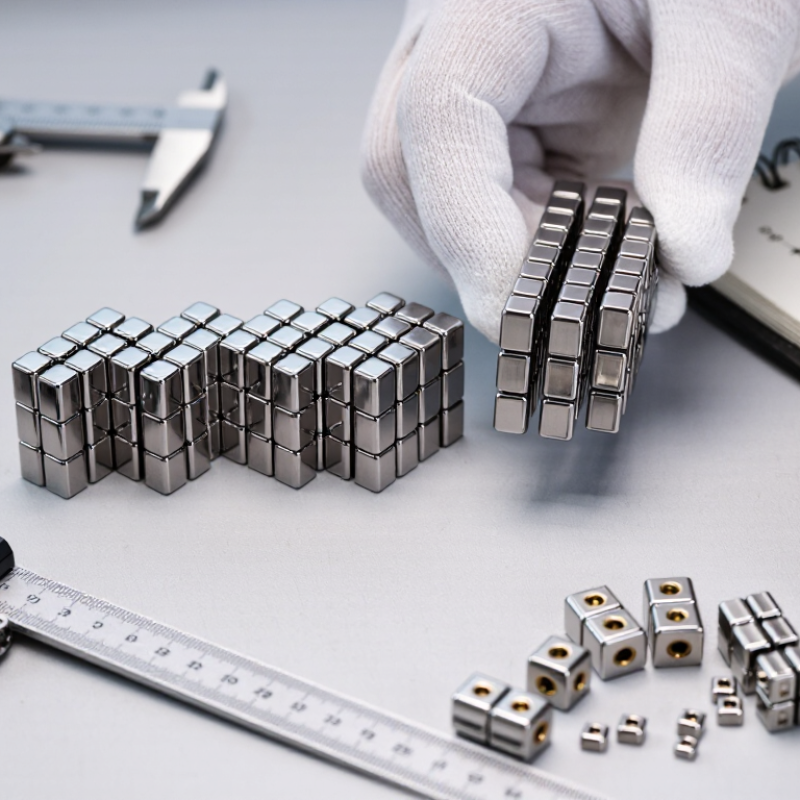
Where to Buy the Best Channel Magnets in China?

Understanding Channel Magnets and Their Common Applications

Channel magnets are permanent-magnet assemblies held inside a shaped steel channel. The steel helps direct magnetic force toward the working face, while holes or slots allow mechanical fastening. Their compact form suits installations where a flat magnet might be awkward to mount. Small gaps matter. Paint, dirt, or a curved surface can reduce holding force more than expected.

Common uses include securing removable signs, positioning workshop jigs, holding access panels, and attaching light fixtures to steel frames. In storage areas, they can keep labels or small tools in place. For doors or covers, channel magnets may provide a tidy closure without a visible latch. They are not automatically suitable for lifting loads; direction of pull, vibration, and surface thickness all affect performance.

When comparing channel magnets from suppliers in China, ask for dimensions, magnet material, coating details, and tested holding-force conditions. A force rating measured on thick, clean steel may not match a painted cabinet or thin sheet-metal panel. Requesting a sample can reveal fit and finish, though one sample cannot prove long-term performance. It is easy to focus on the strongest rating and miss the real installation conditions. Test the magnet on the actual surface before specifying it.

Key Factors for Evaluating Channel Magnet Suppliers in China

When evaluating channel magnet suppliers in China, check whether technical claims fit your installation, not just the product photos. Request a dimensional drawing showing channel width, length, hole positions, and magnet grade. Confirm the stated holding force and how it was measured. A force rating can change with the steel surface, air gap, and direction of pull. Test a sample against the material your equipment will actually use.

Ask how the supplier controls magnet placement, adhesive application, and dimensional tolerances during production. Request inspection records for sample and batch measurements, and clarify how defects are handled. Small details matter. A few millimeters of misalignment may affect assembly, while an uneven coating can complicate handling in damp workshops.

Check whether the supplier can explain material options and provide relevant quality documents, rather than relying on broad assurances. Communication is part of quality, too: send a sketch and note the intended load, temperature, and mounting method. See whether the reply addresses those details clearly.

A polished catalog can still leave important questions unanswered, and a sample alone cannot prove every production batch will match. Ask how repeat orders are checked before committing to volume.

Main Manufacturing Regions and Sourcing Channels

Where to Buy the Best Channel Magnets in China?

Main Manufacturing Regions and Sourcing Channels

China’s channel magnet suppliers are spread across several industrial regions. Zhejiang and Jiangsu have broad metalworking and component networks, while Guangdong offers access to electronics and hardware supply chains. Shandong also has established magnet and materials manufacturers. These are useful starting points, not strict boundaries; suppliers and capabilities vary within each province.

Buyers can source through direct factory inquiries, established B2B marketplaces, trade fairs, or local sourcing agents. Direct contact helps clarify production details. Ask for drawings, material specifications, coating options, and tolerances before comparing quotations. A sample can reveal uneven plating, rough edges, or weak magnetic holding force. Small details matter.

Check carefully. Request recent production photos and a written inspection plan, then confirm whether the supplier produces the channel itself or outsources parts of the work. Factory visits or independent inspections can help verify capacity and quality controls. Online profiles are only a starting point. I would not assume that a large catalog means deep technical expertise; that is an easy mistake. Compare lead times, packaging, and sample results alongside price, and keep questions specific.

How to Verify a Supplier’s Quality and Production Capabilities

When sourcing channel magnets in China, review the supplier’s quality system before comparing price or lead time. Request material specifications, dimensional tolerances, and recent inspection records for the magnet grade you need. Check whether the channel’s steel casing, magnet placement, and surface finish match your drawings. Ask how workers identify and separate batches during production. Look closely. A clean sample is useful, but it does not prove every shipment will be consistent.

Ask to see the production area, either in person or through a live video walkthrough. Observe whether measuring tools are calibrated and whether finished parts receive documented checks. Request samples from a normal production run, not only hand-selected pieces. Test holding force against your own application, using the same steel surface and contact conditions. Confirm monthly capacity, typical order quantities, and how the supplier handles rejected parts. Compare these answers with actual records. One detail may be unclear, and that deserves a follow-up rather than an assumption. Third-party inspection can help verify dimensions and batch consistency before shipment, especially for a first order. Keep the agreed specifications and sample results in writing.

Where to Buy the Best Channel Magnets in China? - How to Verify a Supplier’s Quality and Production Capabilities

Evaluation Area Evidence to Request How to Verify Sound Acceptance Basis
Magnet material and grade Material specification and batch certificate for the magnet used in the channel assembly. Common permanent-magnet options include ferrite and neodymium-iron-boron (NdFeB); the suitable choice depends on the application. Match the certificate and material designation to the purchase specification. For critical applications, arrange independent material or magnetic-property testing on samples. The material, grade, and required magnetic properties are stated on the approved drawing or specification and are traceable to the supplied batch.
Dimensions and fit A dimensioned drawing covering channel length, width, height, wall thickness, magnet position, and any mounting features, with specified tolerances. Measure production samples with suitable calibrated instruments, such as calipers or gauges. Check that the channel and magnet fit the intended mating part. Each critical dimension meets the tolerance agreed on the approved drawing; tolerances should not be assumed when they are not specified.
Holding or pull force Test results for the finished channel magnet, including the test method, contact surface, loading direction, and relevant sample details. Repeat the test using a calibrated force gauge or test fixture. Keep the counterface material, thickness, surface condition, air gap, and pull direction consistent. Compare results with a target defined for the application and a documented test setup. Pull-force readings can change substantially with test conditions.
Magnetic orientation and polarity A polarity or magnetization drawing and the supplier’s inspection method for confirming the orientation of each assembly. Check samples with a polarity indicator or gaussmeter at the specified locations and compare the readings or pole pattern with the approved drawing. Pole orientation matches the drawing, and any required field-strength limits are defined for stated measurement locations and conditions.
Coating and corrosion protection Magnet coating and channel finish details, plus coating inspection records or corrosion-test reports when required by the application. Inspect samples for chips, exposed areas, rust, or finish defects. Confirm any corrosion test uses a named method and agreed exposure conditions. The finish and performance requirements are agreed in writing. Do not compare corrosion-test claims without checking the test method and conditions.
Assembly and bonding Assembly process description, adhesive or mechanical-retention details, and inspection criteria for magnet position and attachment. Inspect a sample for movement, gaps, or adhesive overflow. Where attachment strength matters, agree on and perform a defined retention or handling test. The magnet remains correctly positioned and attached under the agreed inspection and application-specific test conditions.
Production equipment and process control A process flow showing relevant steps such as magnet preparation, channel forming or sourcing, assembly, magnetization where applicable, and final inspection. Request a live or recorded production walkthrough and ask which operations are performed in-house and which are subcontracted. Review inspection records for a recent batch. The supplier can explain how each critical process is controlled and how nonconforming parts are identified and contained.
Inspection and traceability Incoming, in-process, and final inspection records; measuring-equipment calibration records; and a system for identifying production batches. Trace a finished sample back to its production and material records. Check that inspection results use the same requirements as the approved specification. Records are consistent, dated, and linked to identifiable lots. Any quality-system certification should be checked for scope and validity.
Capacity and delivery planning A production schedule, stated output capability for the specified design, lead-time assumptions, and plans for peak demand or equipment downtime. Compare the proposed schedule with recent production records and ask how capacity is allocated between in-house work and subcontracted processes. Capacity and lead times are tied to the actual drawing, order quantity, inspection plan, and material availability—not only to a general factory claim.
Samples and change control Pre-production samples, a signed sample or approved drawing, and a written process for notifying buyers of changes to materials, tooling, or production location. Approve samples against the drawing and retain a reference sample where practical. Confirm that changes require review before implementation. Bulk production matches the approved sample and specification, with documented authorization for any agreed change.
Practical buying check: Define the drawing, material, magnetic performance, test setup, inspection plan, and change-control requirements before comparing quotations. Verify important claims using production samples and records rather than relying on catalog descriptions alone.

Comparing Quotes, Samples, and Delivery Terms Before Buying

Buying channel magnets in China takes more than comparing unit prices. Request itemized quotes from several manufacturers or export-oriented suppliers. Check the steel channel, magnet grade, coating, dimensions, holding force, and packing details. A low quote may reflect thinner steel or a different specification. Ask suppliers to list tolerances and confirm that any test data matches your requested product. Details matter.

Tips: Send every supplier the same drawing and quantity for a fair comparison. Request a sample before placing a large order. Test it on the actual surface where it will be used, not only on a clean steel bench. Test it yourself.

Compare delivery terms alongside price. Confirm sample and production lead times, packaging, shipping method, and who pays for freight or replacement units if goods arrive damaged. Ask how changes to specifications affect the schedule. I would not treat a polished sample as proof of consistent production; it is only one piece of evidence. Keep written records of agreed specifications, inspection criteria, and delivery dates. If a supplier gives vague answers, pause and clarify before paying. A slower, clearer exchange can prevent costly surprises.